New Release: Nebula 2.1 & Nebula Creator

Nebula 2.1

1. Nebula Creator

What it’s for

With the Nebula Creator, everyone can finally use Nebula for free – regardless of whether you’re already an Origins user or not.
The Creator is a free desktop software that prepares point cloud projects for online visualization in Nebula.

How it works 

Download the Creator. Convert your point cloud data and add panos if you wish. Then simply follow the usual Nebula workflow. Done!

2. Nebula 2.1 – Most important new Features

AWS (Amazon Web Services) Compatibility

What it’s for

As promised, we are continuously expanding the number of cloud services that can be connected to Nebula. Due to strong demand, this update introduces support for AWS.

How it works 

In the video, we show step by step how to connect your AWS account to Nebula – even without extensive IT knowledge.
The short version? Just follow the instructions laid out in Nebula.

New Download Manager

What it’s for

Our new Download Manager allows you to download orthophotos and 3D points directly in the browser – a long-awaited feature. This allows you not only to visualize results, but also to easily share them.

How it works 

Click on the Download Manager icon in the menu at the bottom left. Select the desired orthophotos or 3D points in the new window. Click on “ALL” to select all available files at once. Simply click on Download – done.

Height and Cluster Navigation

What it’s for

To make navigation in Nebula even more intuitive, scan positions can now be filtered and displayed by height or cluster.

How it works 

The video includes a detailed explanation.
The short version? Simply filter by height or cluster and show or hide scan positions as needed.

"Display Range" Option in Bubble Views

Screenshot of pointcab nebula free point cloud viewer. option "display range" is shown.

What it’s for

The perfect complement to the new height and cluster navigation! The “Display Range” function allows scan positions to be shown or hidden based on their distance from your current viewpoint in the Bubble View.

How it works 

Simply select the distance from which scan positions should be displayed via the menu in the top right corner.

Measurements & POIs in Bubble Views

What it’s for

Another great enhancement for the Bubble View: measurements and POIs can now also be created directly within the Bubble View.

How it works 

Download the coordinates, then use Ctrl + mouse click to measure distances and 3D points.
Of course, POIs can also be enriched with additional links and documentation.

Screenshot of pointcab nebula free point cloud viewer. distance measurement and POI is shown in bubble view

3. Nebula 2.1 – More New Features

4. Nebula 2.1 – Refinements and Fixes

Book your demo today!

Want to see those shiny new features first-hand? 

Simply book a free, no-obligation demo with one of our support engineers below.

Want to keep up with the latest pointCab news?

Then follow us on Social Media or subcribe to our newsletter!

2025: RECAP & ROUND-UP

2025: Recap & Round-up Jahresrückblick

2025: Recap & Round-up

Recap & Round-up 2025

POINTCAB 2025:
A YEAR THAT MOVED US

As 2025 draws to a close, we at PointCab look back on a year that many of us are still processing. Alongside product successes, updates, and countless events, we unfortunately also faced moments that continue to weigh heavily on our hearts.
Let’s take a look at the key milestones of the year together:

blank

RELEASES FOR A FUTURE-PROOF WORKFLOW

2025 was packed with updates and enhancements across our entire product lineup. Here’s a quick look at the most important updates from our changelog:

  • Origins 4.2 Updates:
    In addition to ongoing optimizations and broader compatibility with new data formats, we introduced many new features and implemented customer requests to make our point cloud software, Origins, even more powerful and intuitive.

  • Nebula 2.0:
    Our cloud solution for point cloud projects received a major overhaul.
    Alongside numerous new features, the interface has been redesigned to be even more streamlined and user-friendly. Sharing point clouds has never been easier.

  • Point Cloud Plugins Update 3.0:
    4AutoCAD, 4ArchiCAD, 4Brics, 4Revit & 4ZWCAD

    With version 3.0, all our point cloud plugins received a brand-new import interface, making them more intuitive and easier to use. Naturally, each version is compatible with the latest release of its respective CAD software.
    Our newest 4ArchiCAD 3.0 update, for example, includes multiple new features: multi-layer import, transparent orthophotos, XYZ data import as 3D points, and the new Update Mesh function.

A YEAR FULL OF CONNECTIONS – EVENTS,
NEW PARTNERS & RESELLERS

2025 was a year rich with connection – both in person and online. From GeoWeek in Denver with exciting live sessions featuring Mack (LIDAholics), to the Oldenburg BIM & 3D Days, the LSE Roadshow of our sister company in Stuttgart, the Energy Excellence Days, and major industry events like Intergeo in Frankfurt, we had countless opportunities to showcase our solutions, speak directly with users, and gather clear market insights.

A lot happened online as well. Our webinars introducing the new Nebula 2.0 cloud solution drew significant attention, underscoring the strong demand for scalable, modern workflows.

Partnerships remained a central theme. With new collaborations such as the XGRIDS bundle with Laserscanning Europe and Seiler Design Solutions in the US, as well as new resellers like GEOsat, we expanded our reach in 2025 and moved even closer to our customers than ever before.

selfie of 4 people on the pointcab and laserscanning booth at intergeo 2025
Richard we will miss you

FAREWELL AND TRANSITION

This year brought a painful loss. With great sadness, we had to say goodbye to our esteemed CEO and co-founder, Dr. Richard Steffen. After a long battle with cancer, our friend and CEO Richard passed away peacefully this summer surrounded by his family.

Obituary Richard

Following Richard’s wish, his long-time friend and business partner Eric Bergholz stepped in as the new CEO of PointCab. Eric and Richard shared a deep friendship since the founding of PointCab. With Eric – who is also the CEO of our sister company Laserscanning Europe – our future is in capable hands and will continue in the spirit of Richard’s vision.

MOVING FORWARD TOGETHER

Beyond the professional milestones, 2025 was shaped by real team moments. Our team-building event in sunny Valencia was a highlight that continues to resonate. The energy we built there carries into our everyday work – and it’s exactly what makes our team the driving force behind our success.

If you want to strengthen this environment, we’re excited to receive your application for the position of Technical Product Manager with a Customer Success Focus. Let’s head into the new year together.

As we say goodbye to 2025, we look forward to 2026 with determination – a year centered on innovation and teamwork.

blank

WHAT'S LEFT TO SAY?

THANK YOU!

Despite everything heavy and emotionally difficult we had to face, 2025 was a strong year of growth, progress, and real achievements. We are grateful for all customers, partners, team members, and friends who stood by our side through this challenging time. The incredible support we received meant a great deal to us. Your compassion moved us deeply and helped us keep going. Thank you for every message, every conversation, and every moment of support.

Thank you to everyone who is part of the PointCab family. Here’s to an inspiring and successful 2026!

PointCab Better Together

4Archicad 3.0 Plugin Update

blank

4Archicad Plugin 3.0 Update

DISCOVER ALL NEW FUNCTIONS

4Archicad-3.0 Plugin Update

The new PointCab 4Archicad Plugin 3.0 is here!
This update brings a range of new features and improvements that make working with point cloud data from Origins in Archicad significantly more efficient, intuitive, and effortless.

POINTCAB 4ARCHICAD 3.0 – WHAT'S NEW

IMPORT MULTI SHEETS

New feature in our 4Archicad plugin:

With the new setting “import all sheets as worksheets,” layouts with reflectivity, delta, indexed, and more can now be easily transferred in one step.

You’ll see the full breakdown in the video.

SET TRANSPARENCY OF ORTHOPHOTOS

New feature in our 4Archicad plugin:

With the new “Set orthophotos transparent” feature, Orthophotos can now be imported with transparency. Without a white background, the grid pattern behind them is clearly visible.

You’ll see the full breakdown in the video.

IMPORT XYZ FILE AS 3D POINTS

Effortless import of XYZ files with our 4Archicad plugin:

Bringing XYZ files from Origins into Archicad is now incredibly simple. Just a few clicks and your 3D points appear right where you need them.

Check out the video to see how it works in detail.

UPDATE MESH

With the new “Update Mesh” feature, adding additional 3D points to an existing mesh in Archicad is quick and effortless. You can refine or expand your mesh in no time.

Watch the video to see exactly how it works.

GENERAL IMPROVEMENTS

Want to keep up with the latest pointCab news?

Then follow us on Social Media or subcribe to our newsletter!

User Story: Innovative Road Surveying with 3D Laser Scanning, Photogrammetry, and 3D Printing

blank

WHAT IT'S ABOUT?

For his thesis in Civil Engineering (Infrastructure) at DHBW Mosbach, Maximus König relied on a modern, combined workflow for as-built documentation.

The project goal was clearly defined: to create an accurate, digitally viable documentation of an existing retaining wall along the L172 through-road in the Hammereisenbach district. In addition to digital plans, a physical 3D model was to be produced as a demonstration object.

 The approach: combining modern technologies such as terrestrial laser scanning, drone photogrammetry, point cloud processing, and 3D printing.

PROJECT START: PLANNING AND PREPARATION

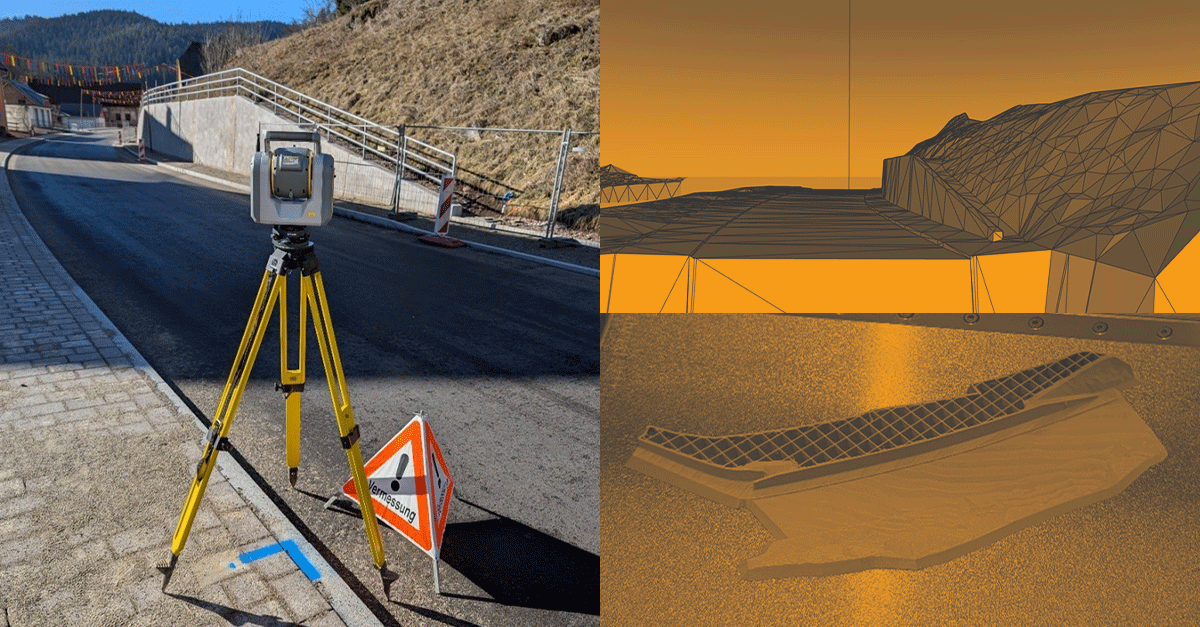
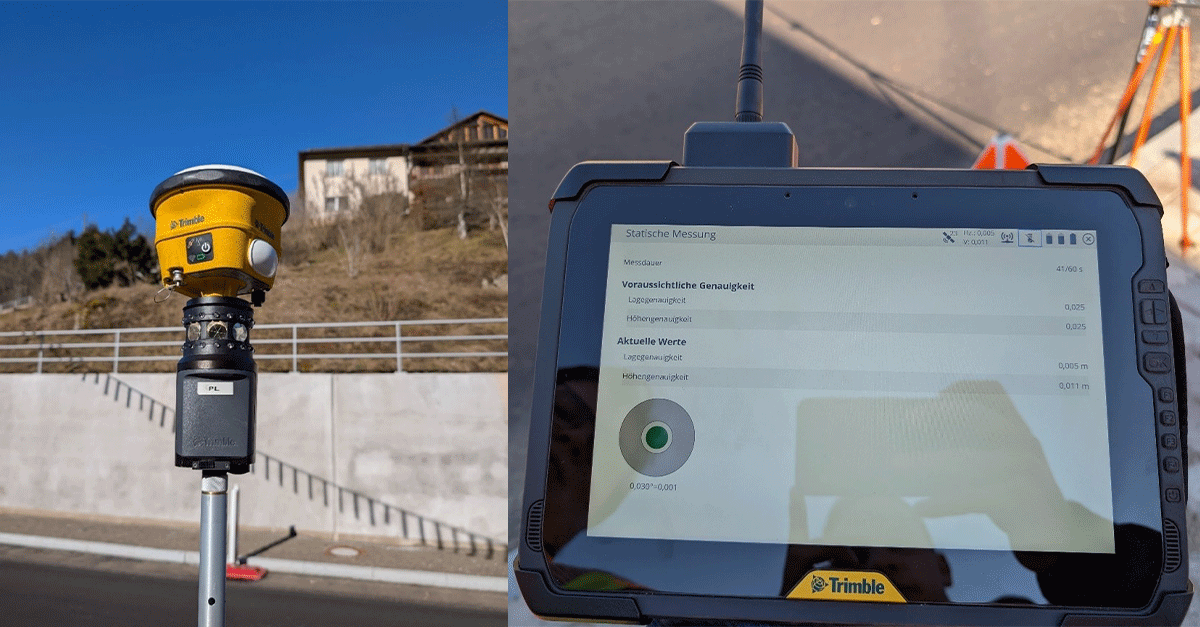
Before starting with the data collection, Maximus established a control point network. This served both for the positioning of the terrestrial laser scanner and the georeferenced evaluation of the drone imagery. With this setup, the foundation was laid to merge both measurement technologies and align their data with precise coordinates.

TWO METHODS, ONE GOAL: LASER SCANNING MEETS DRONE

The survey combined terrestrial laser scanning with photogrammetric drone flights:

  • The Trimble SX12, a highly precise terrestrial laser scanner, provided detailed point cloud data of the retaining wall area and the surrounding roadway.

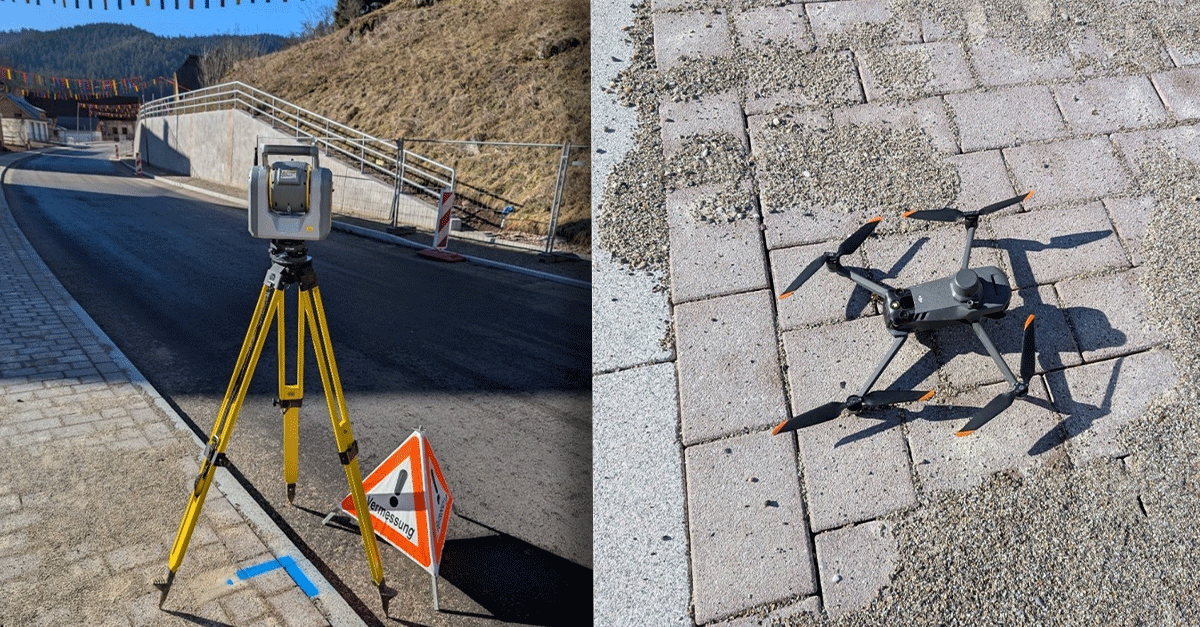
  • In parallel, a drone survey was conducted with the DJI Mavic 3 Enterprise. Through photogrammetric processing, another point cloud was generated.

The drone flight took only about 20 minutes, while the terrestrial scanning – requiring multiple setups – lasted around three hours.

DATA FUSION AND PROCESSING: FROM RAW DATA CHAOS TO POINT CLOUD

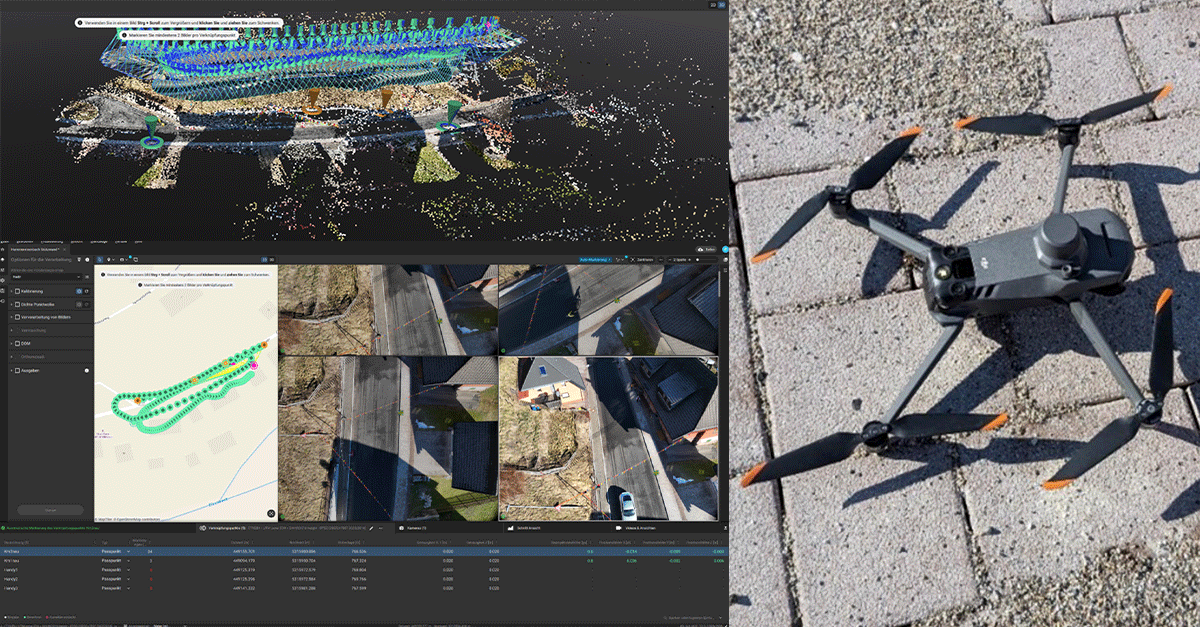
After completing the fieldwork, the captured data was processed in PIX4Dmapper, which took about one hour. This included:

  • Georeferencing the drone images using the previously placed control points,

  • Generating a point cloud from the orthophotos, and

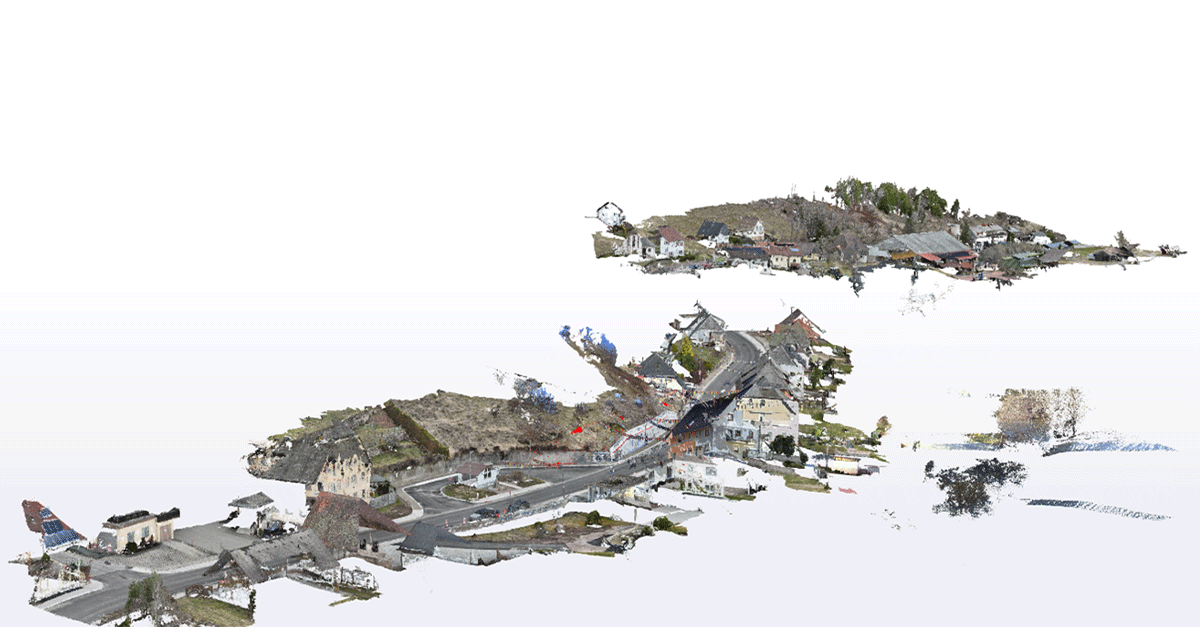
  • Merging the drone and laser scan data into one precise, unified point cloud.

This combined point cloud then served as the basis for all further steps.

ANALYSIS AND PROFILE CREATION WITH POINTCAB ORIGINS

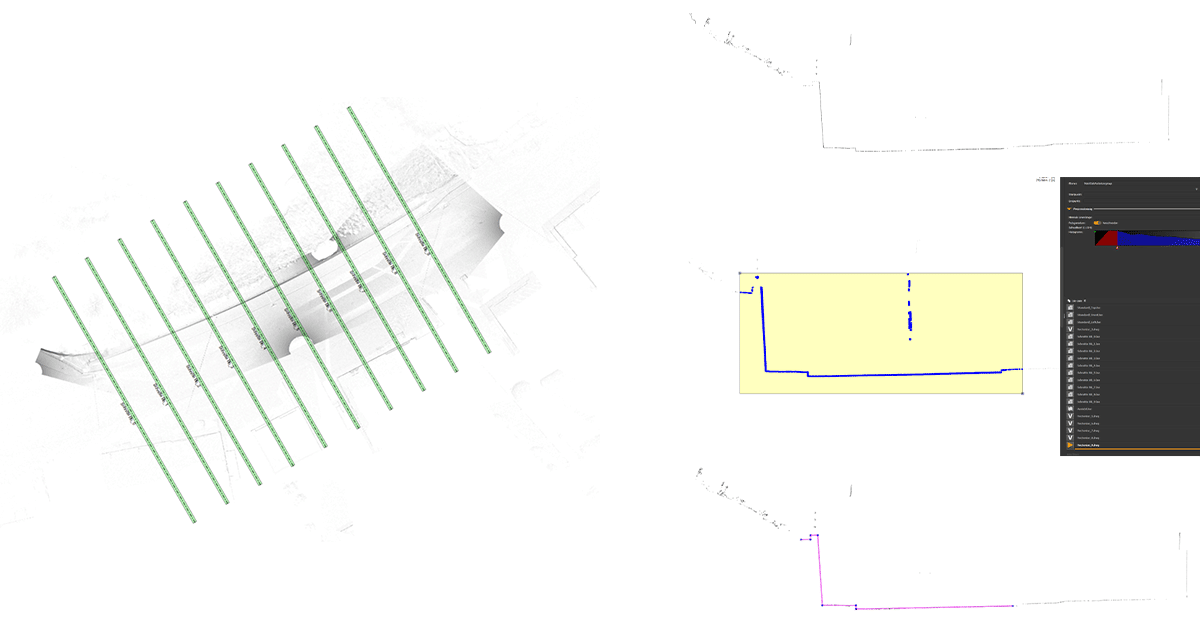
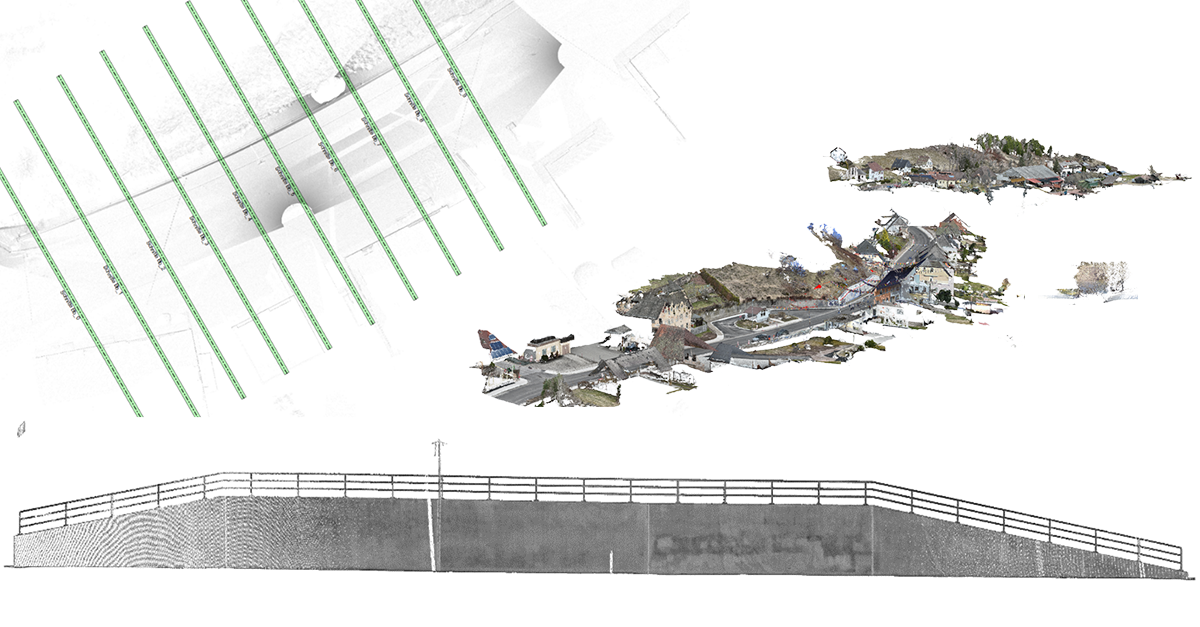
The unified point cloud was imported into PointCab Origins, where Maximus first created an overhead view and then derived cross-sections and profiles.

The integrated vectorization tools were especially useful: they allowed for the fast creation of linework, which could be exported directly as DXF files. These DXFs were then used in other CAD programs – for plan generation or for building a digital terrain model (DTM).

Processing in PointCab Origins took about four hours in total. The efficiency and precision in creating profiles proved particularly valuable.

FROM CROSS-SECTION TO PHYSICAL MODEL: FURTHER DTM PROCESSING

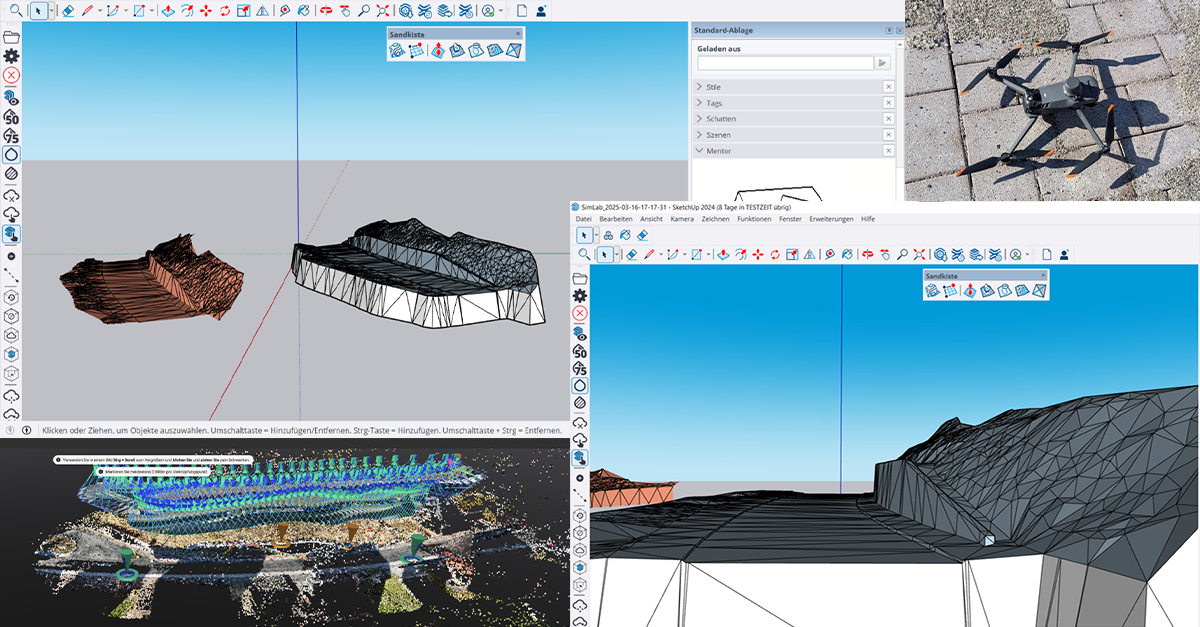
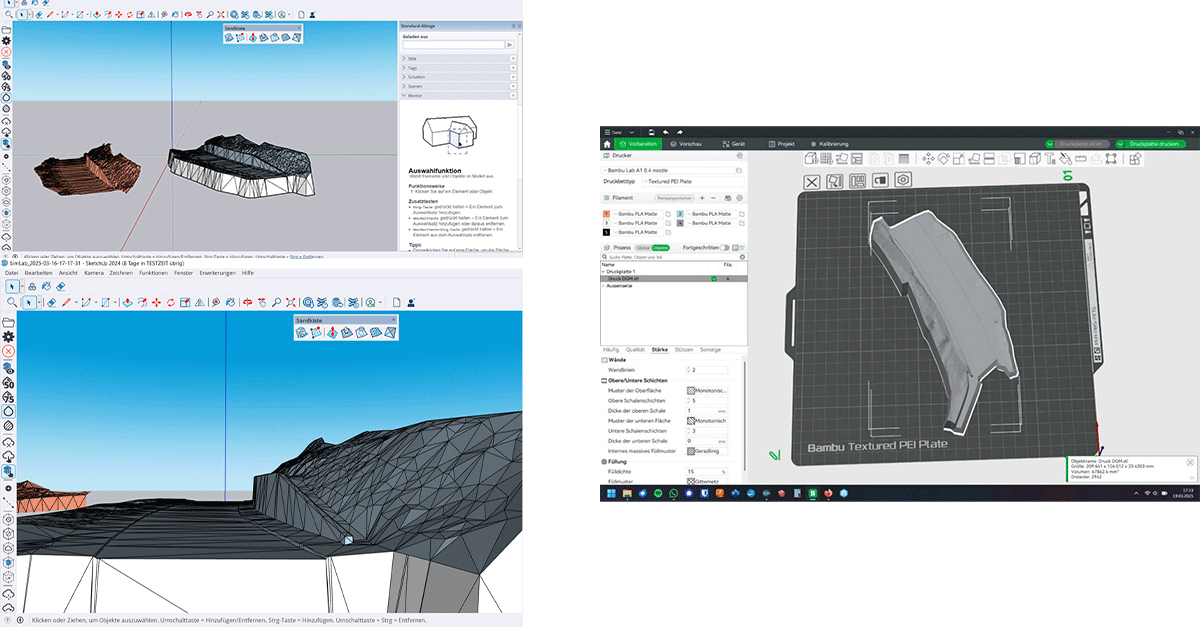
Next, the exported DXF profiles were imported into RIB Civil, where Maximus created a digital terrain model (DTM) of the surveyed area. This model was then transferred into SketchUp and merged into a solid body with a closed surface.

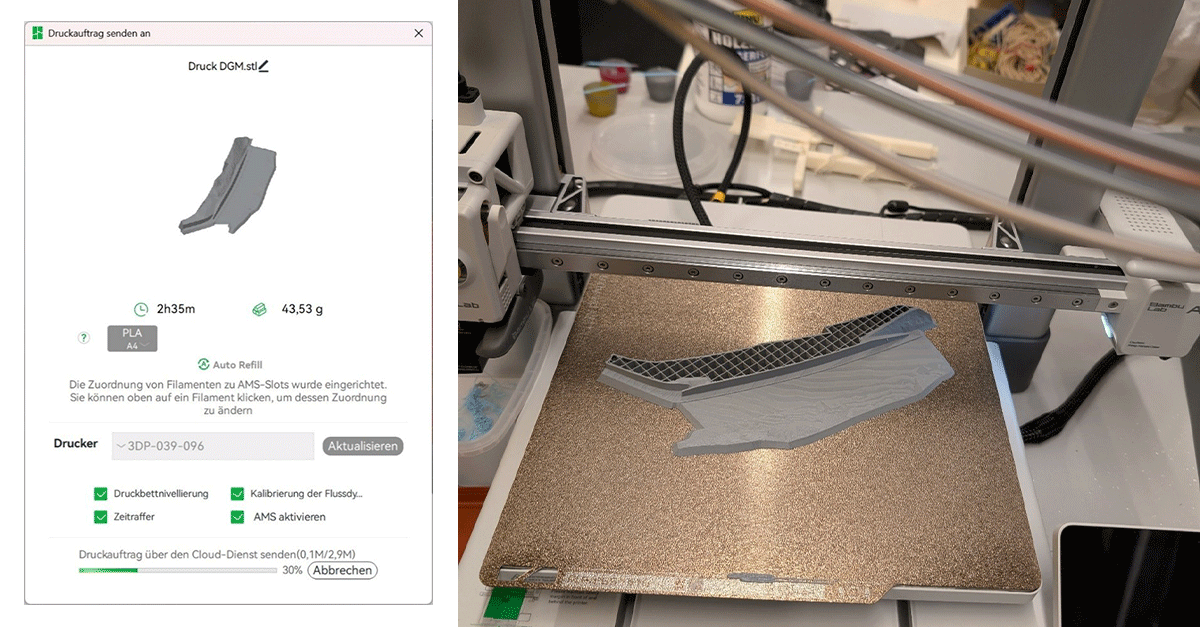
The final preparation of the 3D model for printing was done in Bambu Studio, where it was converted into the required STL format. The 3D print itself marked the grand finale: a tangible model of the roadway section – ideal for presentations and discussions with project stakeholders.

ADDITIONAL EVALUATION: VIRTUAL TOUR AND PLAN DRAWINGS

Using Trimble Business Center, Maximus created a virtual walkthrough of the point cloud, which took about one hour. This type of visualization offers an intuitive look at the structure and can be used for public participation or planning workshops.

For those looking for a simpler, location-independent way to view point clouds, PointCab Nebula provides an alternative. While it cannot generate flythroughs, the cloud platform makes it easy to view and share large point cloud datasets directly in a web browser – perfect for project teams or clients.

Additionally, the cross-sections generated in PointCab were imported into AutoCAD to create traditional plan drawings for the project documentation. This step took about six hours but delivered professional results fully comparable to standard CAD plans.

CONCLUSION: CLEAR PLANNING, EFFICIENT WORKFLOW

With his project, Maximus König demonstrated impressively how modern surveying methods and software tools can be combined effectively, from data acquisition to analysis and visualization. The key to success lay in carefully planning the workflow and using specialized software for each step.

Maximus looks back and reflects:

“Creating a plan at the beginning and mapping out which software is needed for which task and goal saves an enormous amount of time.”

His project proves: 
with a well-thought-out workflow and the right tools, even complex infrastructure projects can be digitally captured efficiently, precisely, and presented in a way that is both clear and engaging.

Project Participants

The project was carried out by Maximus König as part of his final thesis, “Innovative Road Surveying with 3D Laser Scanning.”

University: DHBW Mosbach
Degree Program: Civil Engineering (Infrastructure)

Want to keep up with the latest pointCab news?

Then follow us on Social Media or subcribe to our newsletter!

How to import your point cloud into Origins from Trimble X9

blank

HOW TO IMPORT YOUR POINT CLOUD FROM TRIMBLE X9 INTO ORIGINS

blank

Struggling to import your point clouds from your Trimble X9 laser scanner into PointCab Origins?
Don’t worry, we’ll fix that with one setting.

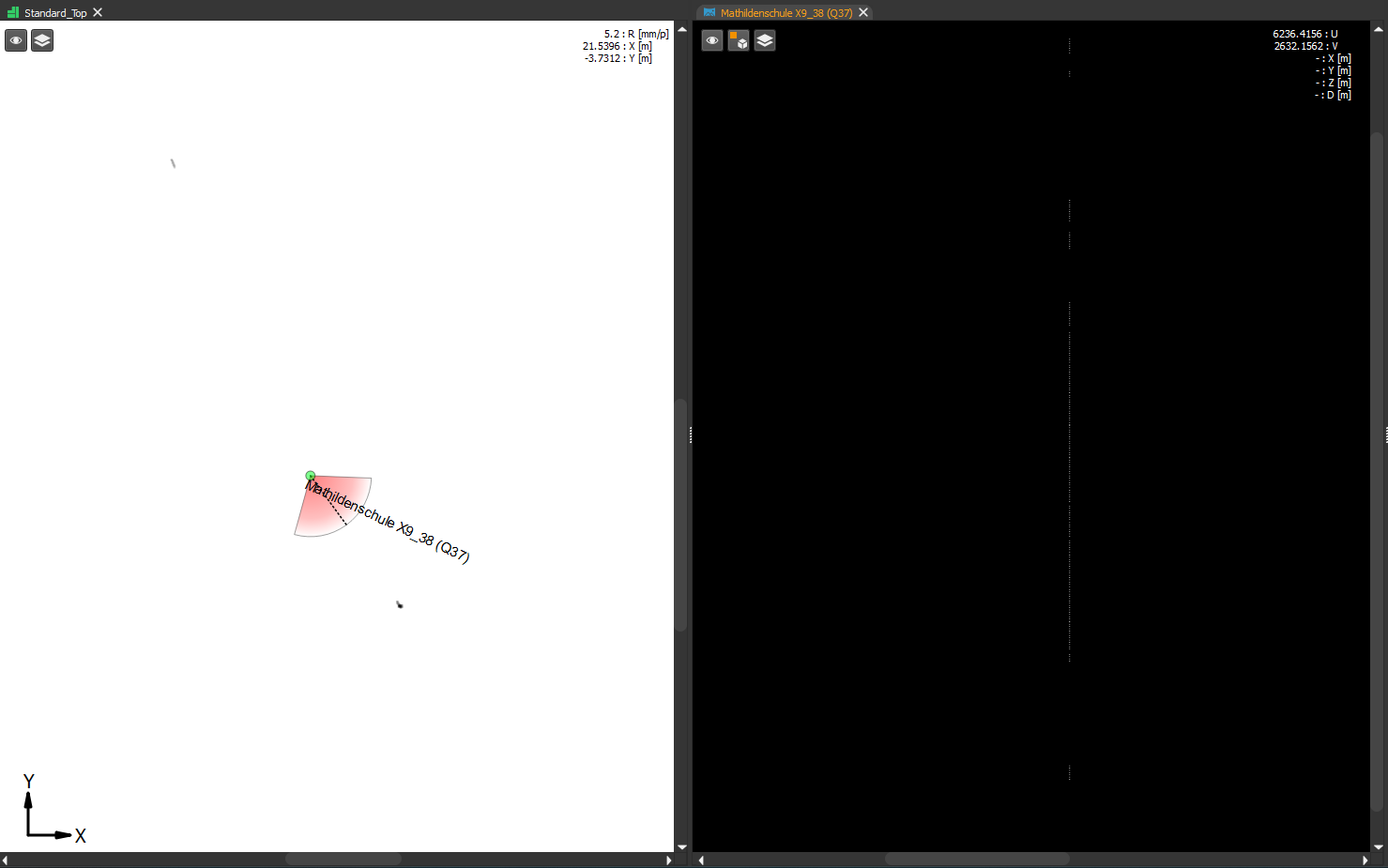
Empty results from X9 point cloud data in Origins?

What’s the cause of the problem?

Trimble scans contain empty rows and columns, creating a “checkerboard pattern” in the data.

This can cause points to be removed by the neighborhood filter, which eliminates points that are too far apart.

Don’t worry, we’ll fix that now!

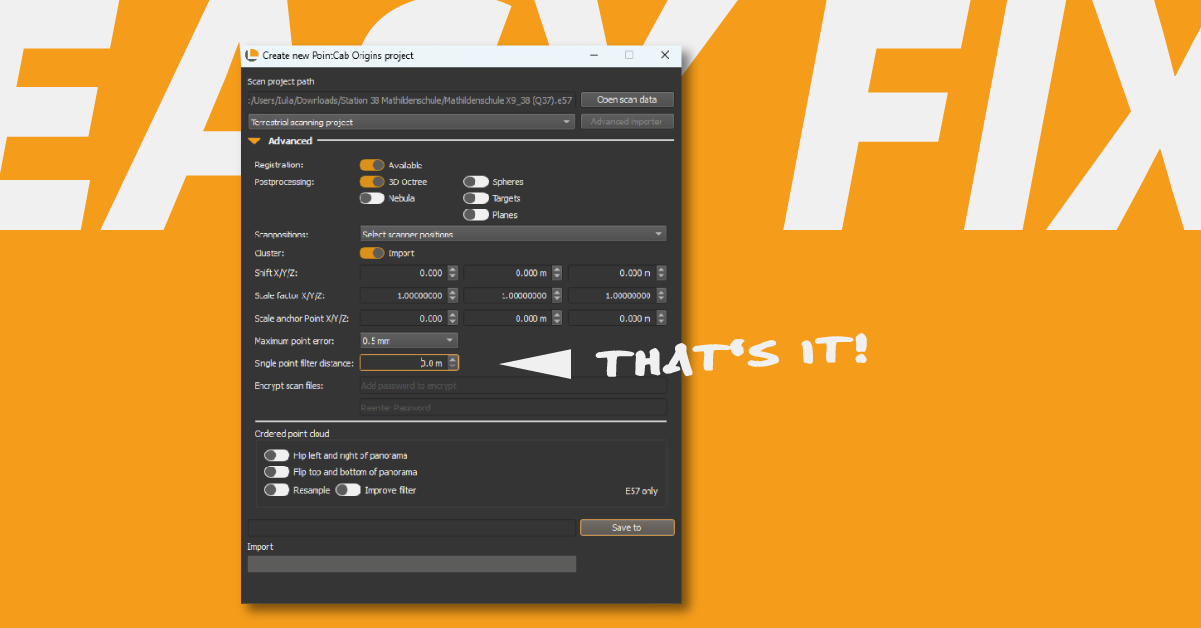
Easy fix: Change your import settings

How to change the settings?

  • Select the desired e57 scans.
  • Go to “AdvancedSingle point filter distance” and set the value to 0.0.

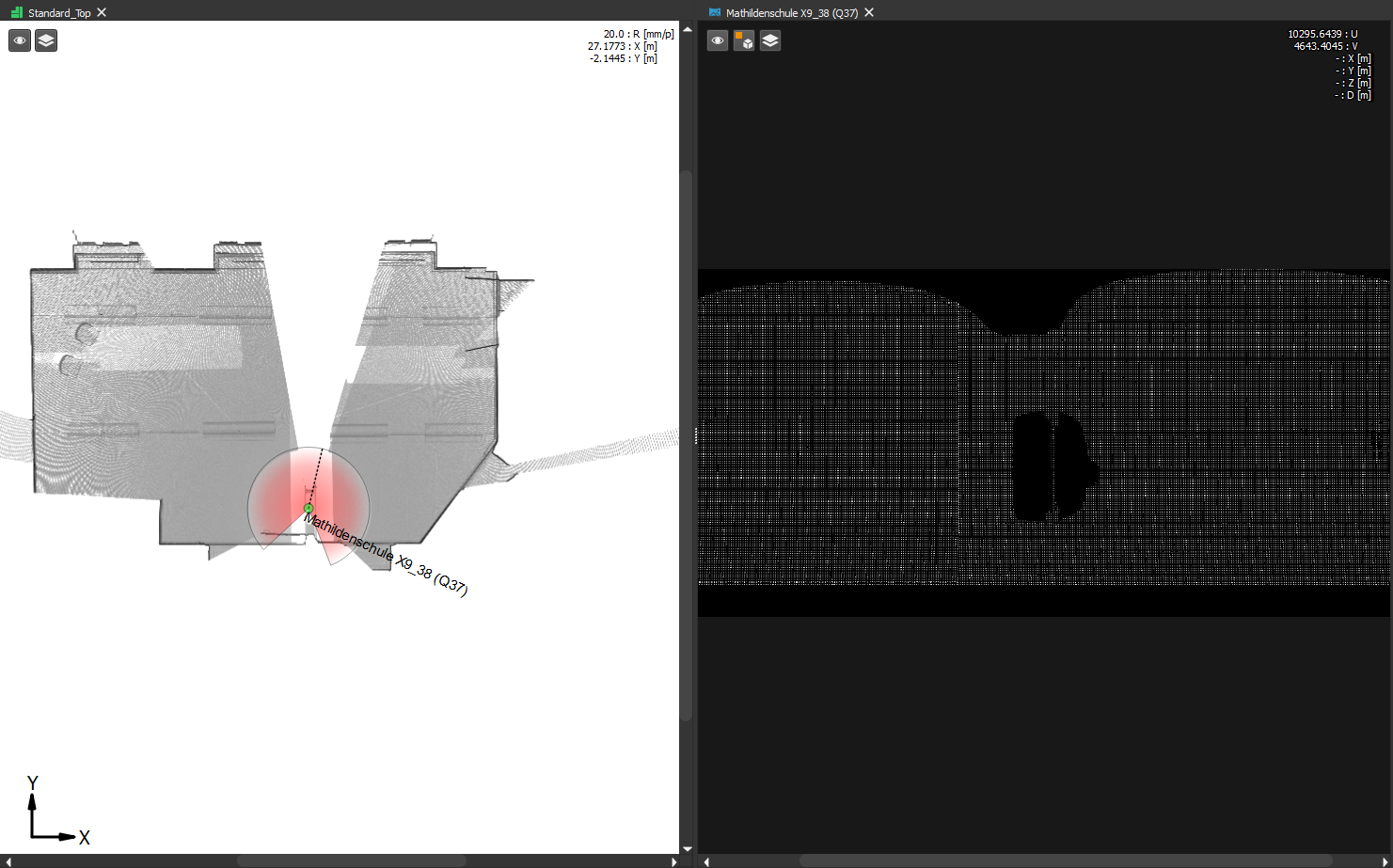
The result:

Fixed!

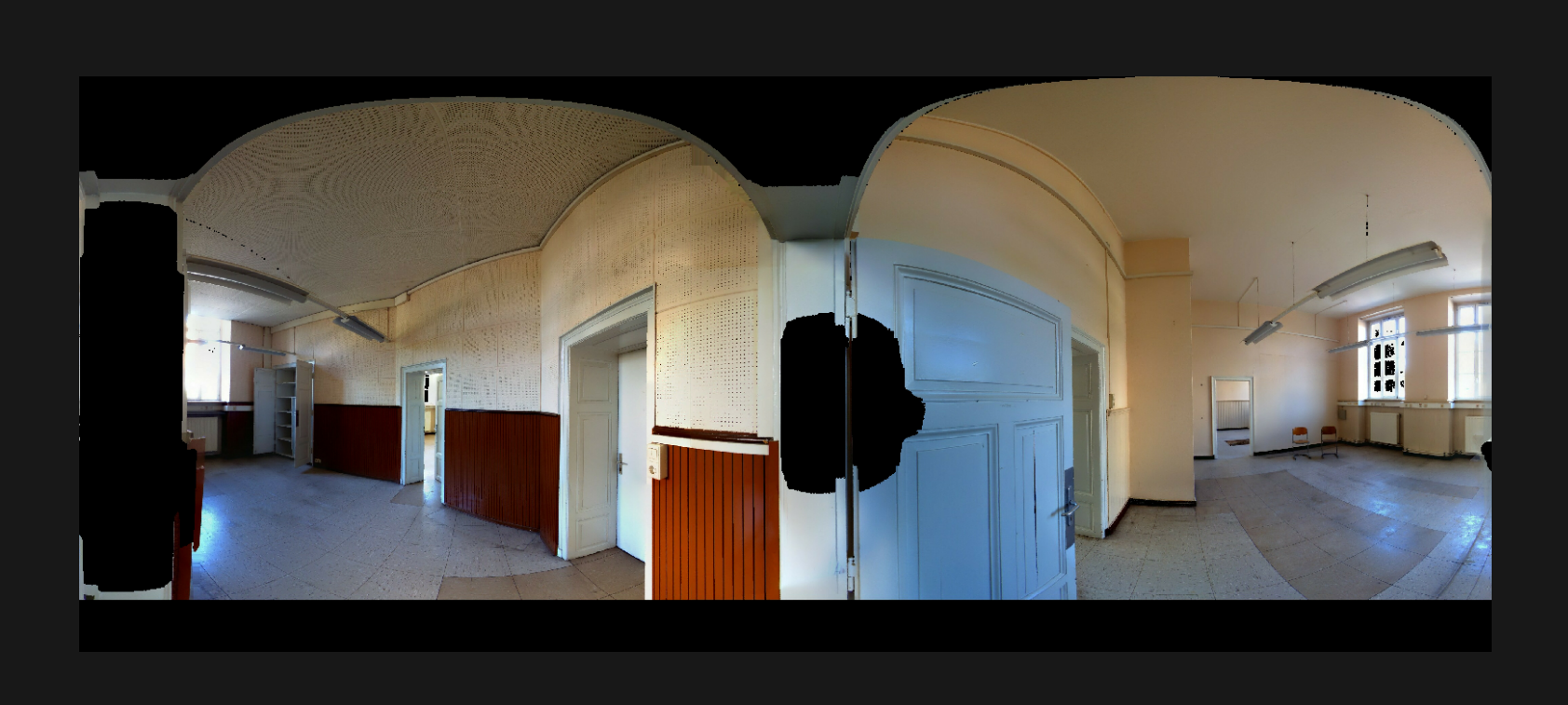
With the correct settings, the data from the Trimble X9 scanner is displayed properly.

In both the standard top view and the panorama, everything now appears as it should.

Want to keep up with the latest pointCab news?

Then follow us on Social Media or subcribe to our newsletter!

The Origins of Laser Scanning Part 3

blank

Part 3: Nowadays

3D Laser Scanning as an Everyday Tool in the Digital World

blank

Where does laser scanning come from? Who invented it?
How has laser scanning been used over the past decades up to today?

Our series “The origins of laser scanning” gets to the bottom of these questions and provides answers about this fascinating technology, which by now is hardly imaginable to live without in our everyday lives.

Technological maturity from 2005 onwards

From the mid-2000s, scanners with integrated compensators came onto the market. These automatically balanced inclinations and significantly increased measurement accuracy. Pioneers included manufacturers such as Leica Geosystems and Trimble.

From specialized device to standard tool

Today, 3D laser scanning is an integral part of construction, industrial applications, and heritage conservation. With stationary, mobile, or drone-based systems, buildings, facilities, and entire cities can be captured in three dimensions.

BIM and digital workflows

The captured point clouds flow directly into CAD and BIM systems. AI-based processes often take over automatic model generation and analysis. This saves time and reduces errors.

BIM – Building Information Modeling

BIM is a working method in which all relevant building data is digitally recorded, combined, and networked. Laser scanning provides the precise geometry data that forms the basis for digital planning.

Diverse applications

  • Architecture & as-built documentation
  • Reverse engineering & quality assurance
  • Environmental and climate research
    (e.g., glacier observation, coastal changes)
  • Security and surveillance technology
  • Traffic and urban planning

Software as the key

Raw data alone has no added value – only with specialized software such as PointCab Origins can millions of points be turned into understandable, usable results. The software is compatible with all common CAD and BIM systems and translates complex data into tangible information.

Did you know…?

… modern LiDAR systems today can capture up to 2 million measurement points per second – and detect details such as individual leaves on a tree or cables in an industrial facility?

That was the last part of our series.

Curious for more? We regularly publish articles on our blog.  Stay tuned!

Want to keep up with the latest pointCab news?

Then follow us on Social Media or subcribe to our newsletter!
The Origins of Laser Scanning Part 2

blank

Part 2 – From the Laboratory to Everyday Life

LiDAR Conquers Industry & Research

blank

Where does laser scanning come from? Who invented it?
How has laser scanning been used over the past decades up to today?

Our series “The origins of laser scanning” gets to the bottom of these questions and provides answers about this fascinating technology, which by now is hardly imaginable to live without in our everyday lives.

From research to application

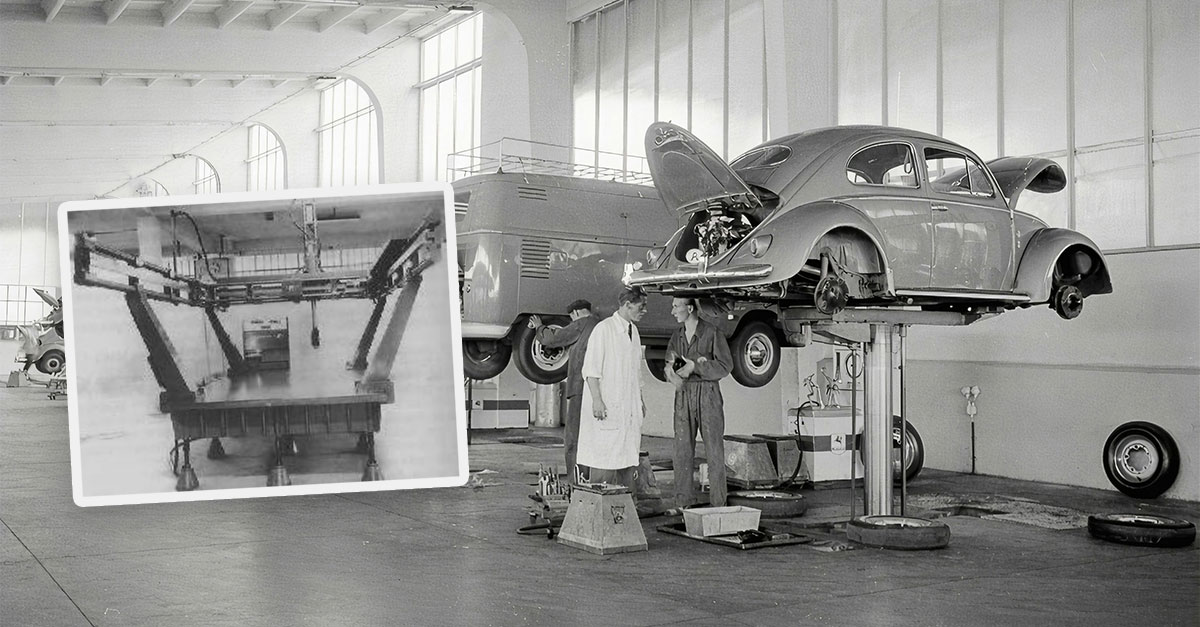
Parallel to military and scientific use, the first industrial systems emerged in the 1970s. The Italian company DEA developed a 3-axis coordinate measuring machine that set new standards in physical object measurement.

In 1972, students at the University of Utah used this technology to digitally measure a car – a VW Beetle – for the first time using an algorithm.

Point Cloud – the digital image of reality

A point cloud is a collection of millions of individual measurement points in space. Each point has an exact position (x, y, z) and often additional information such as color or intensity. Together, they form an accurate 3D model of the captured scene.

New fields of application in the 1980s

blank

In 1984, the first stripe-based laser scanner was developed to create a 3D image of the human head. This technology was mainly used for animation and was a precursor to modern 3D scanning methods in film, medicine, and gaming.

The 1990s: The market opens up

blank

In 1992, Trimble (then Mensi) launched the S-series – 3D laser scanners for industrial applications. In 1993, the first commercially usable scanners followed.

The portable breakthrough

blank

In 1996, Cyra Technologies developed the Cyrax, the first portable 3D laser scanner designed for architects, engineers, and surveyors. A few years later, Leica Geosystems acquired the company and established itself as one of the leading manufacturers.

Did you know…?

… the first portable 3D laser scanner (Cyrax, 1996) was as big as a briefcase – and yet replaced entire teams in many surveying projects?

Here’s what’s coming next:

In the next part of our series, we will look at 3D laser scanning as an everyday tool in the digital world from the 2000s up to today.

Want to keep up with the latest pointCab news?

Then follow us on Social Media or subcribe to our newsletter!
The Origins of Laser Scanning

blank

Part 1 – Birth of a Technology

From Laser Flashes to Point Clouds

blank

Where does laser scanning come from? Who invented it?
How has laser scanning been used over the past decades up to today?

Our series “The origins of laser scanning” gets to the bottom of these questions and provides answers about this fascinating technology, which by now is hardly imaginable to live without in our everyday lives.

A laser, a flight to the Moon – and the start of a revolution in surveying technology

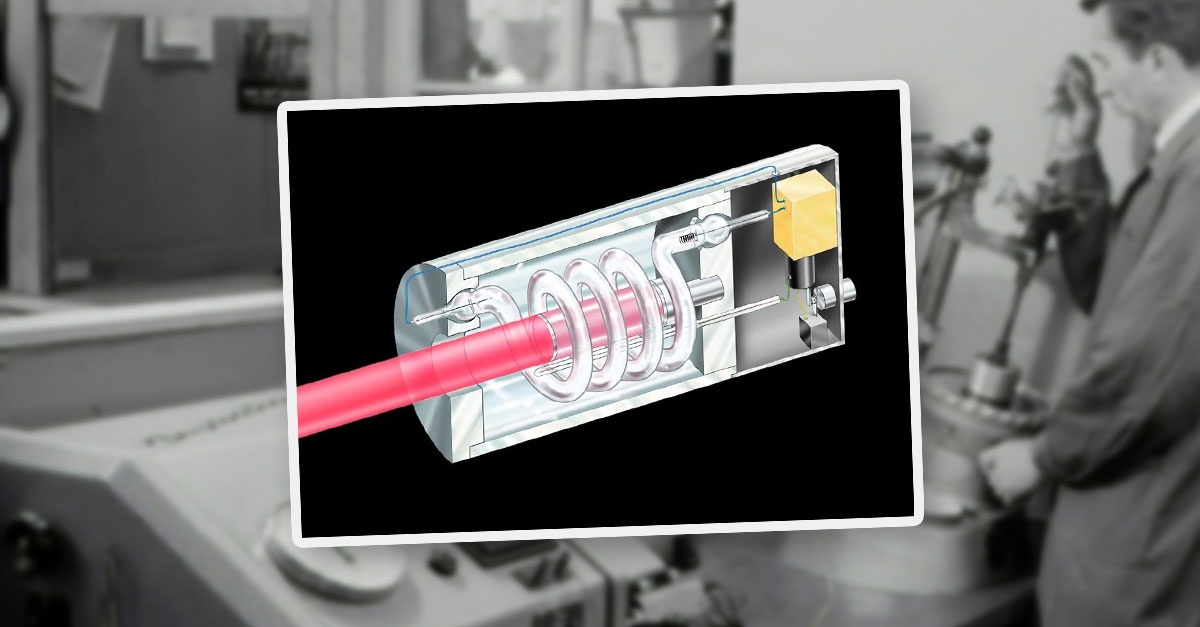
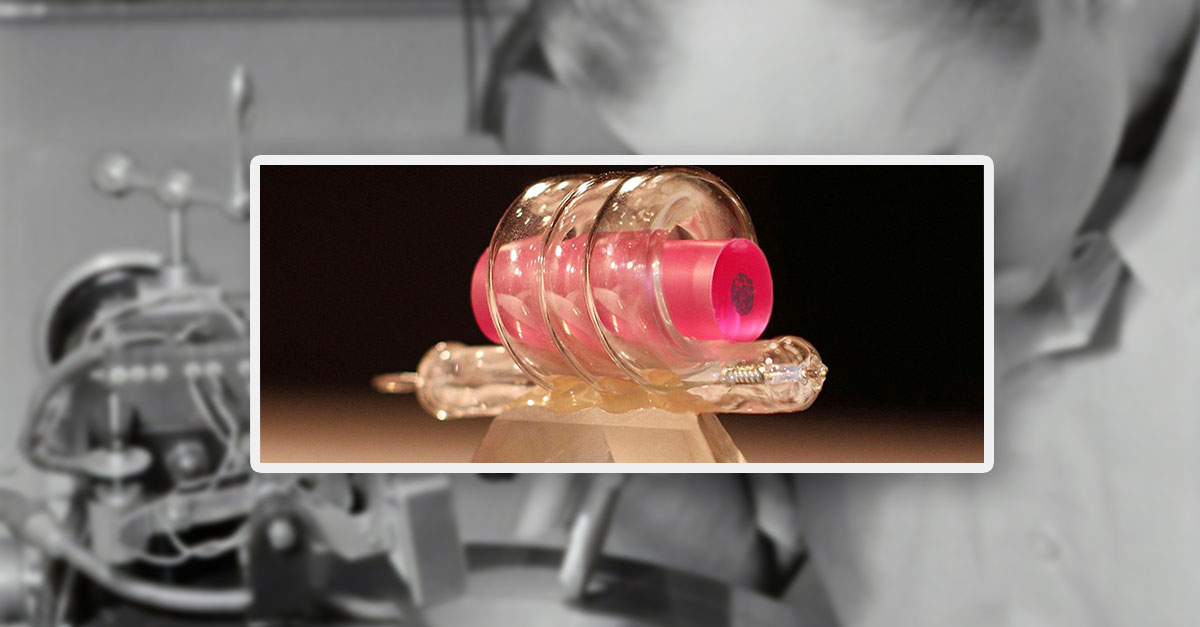
In 1960, US physicist Theodore Maiman at the Hughes Research Laboratories developed the first functional laser. It was based on a ruby crystal and marked the starting point for a new era of measurement and sensor technology.

Theodore Maiman invented the laser because he wanted to transfer the principle of the maser to light instead of microwaves. Despite initial rejection from his superiors, he continued the research on his own initiative under the threat of being fired. Practical applications were initially unclear – Maiman himself called the laser “a solution looking for a problem.”

On May 16, 1960, Theodore Maiman and Charles Asawa built the first functional ruby laser. Despite the initial rejection, Maiman was given a limited budget and published his results in August 1960 in the journal Nature. The invention spread quickly, but his employer remained skeptical. In 1962, Maiman therefore founded the Korad Corporation; the US patent followed in 1967.

Fun Fact:

The “father of the laser” Theodore Maiman never received the Nobel Prize – but in the year 2000, his own invention was used to perform laser surgery on him in Munich.

blank

Just one year after Maiman’s development of the laser, Hughes Aircraft Company built the first LiDAR prototype (Light Detection and Ranging).
The principle: Short laser pulses are emitted, hit a target, and reflect back. From the time the light takes for the round trip, the distance can be calculated.

What is LiDAR?

LiDAR stands for Light Detection and Ranging. A device emits laser pulses and measures the time until the light is reflected from the target. This makes it possible to determine distances and structures precisely – often with millimeter accuracy.

Military beginnings

As early as the 1950s, the US military experimented with optical measuring devices – an early precursor of today’s LiDAR systems. In the 1960s, LiDAR was initially used for military terrain mapping and reconnaissance.

Apollo 15 – LiDAR in space

In 1971, LiDAR experienced its international breakthrough: NASA used the technology on the Apollo 15 mission to map the surface of the Moon. Using a flashlamp-pumped ruby laser, thousands of measurements of the lunar topography were carried out from orbit.

Slow development until the 1980s

Use in aerospace grew in the 1970s, for example for topographic mapping of landscapes, ice sheets, oceans, and the atmosphere. Only with the availability of commercial GPS systems and improved satellite communication in the 1980s did LiDAR become practical for more precise and efficient airborne measurements.

Did you know…?

… the Apollo 15 mission in 1971 used LiDAR to measure the Moon’s surface from orbit? This made LiDAR the first laser-based measuring method in space.

Here’s what’s coming next:

In the next part of our series, we will look at the transition from research to the practical use of LiDAR technologies in the decades up to the late 1990s.

Want to keep up with the latest pointCab news?

Then follow us on Social Media or subcribe to our newsletter!
A New Chapter for PointCab: Welcome Eric Bergholz as CEO

blank

A New Chapter for PointCab:

Welcome Eric Bergholz as CEO

blank

With the passing of our beloved CEO and Co-Founder, Dr. Richard Steffen, PointCab has lost not only an exceptional leader but also a dear friend.

Yet even in the face of this loss, Richard made sure that the company he built with so much passion would continue to thrive.

It was his wish that
Eric Bergholz take over the role of CEO and lead PointCab into the future.

blank

Eric is closely connected to PointCab’s story. As CEO of Laserscanning Europe, our sister company, he was directly involved in the creation of the very first version of PointCab Origins. He also provides extensive experience and a deep understanding of the laser scanning market.

He has accompanied our journey since day one, watched our team grow, and worked side by side with Richard on strategies and innovations.

More than a business partner, he was one of Richard’s best friends – and someone Richard trusted deeply to continue his legacy.

Eric knows our roots, shares our values, and understands our mission.

Together with our leadership team – Chris (COO), Martin (CTO), and Nicole (CMO) – he will ensure that PointCab continues on its path of innovation, reliability, and customer focus.

Over the past years, Richard gradually handed over responsibilities to this leadership team, allowing them to gain experience and successfully guide the company’s day-to-day operations.

This transition has already proven itself in practice: projects moved forward, the software evolved, and our partnerships grew stronger.

Now, with Eric taking on the role of CEO, PointCab builds on both this continuity and his unique perspective as someone who has been part of our journey from the very beginning.

blank
blank

Eric knows our roots, shares our values, and understands our mission.

Together with our leadership team – Chris (COO), Martin (CTO), and Nicole (CMO) – he will ensure that PointCab continues on its path of innovation, reliability, and customer focus.

Over the past years, Richard gradually handed over responsibilities to this leadership team, allowing them to gain experience and successfully guide the company’s day-to-day operations.

This transition has already proven itself in practice: projects moved forward, the software evolved, and our partnerships grew stronger.

Now, with Eric taking on the role of CEO, PointCab builds on both this continuity and his unique perspective as someone who has been part of our journey from the very beginning.

blank

That is why we can look to the future with confidence:
PointCab stands on solid ground, with a clear strategy, a capable leadership team, and a CEO who knows the company inside and out.

As we begin this new chapter, we warmly welcome Eric into our team as our new CEO.

We are confident that, with his leadership, PointCab will continue to develop pioneering solutions, expand its global presence, and remain the trusted partner you know us to be.

Want to keep up with the latest pointCab news?

Then follow us on Social Media or subcribe to our newsletter!
Obituary Richard

blank

PointCab’s beloved CEO and Co-Founder, Dr. Richard Steffen has passed away

we will miss him dearly

After battling with cancer for almost 6 years, our CEO and Co-Founder, Dr. Richard Steffen, has passed away peacefully, surrounded by his loved ones, on July 22nd. In this Obituary, we would like to reflect on the person he was and the impact he has made on the lives of those surrounding him.

Death always comes as a shock. Although in Richard’s case, there was some time to prepare, one is never truly prepared for losing someone close to one’s heart. And Richard was just that, close to all our hearts. He was more than the CEO of PointCab. He was a son, a brother, a husband, a father, and one of the most loyal and caring friends one could have.

Richard's life before PointCab

When Richard was born in 1976 in Schwerin, he was born into a divided Germany, in a country that no longer exists. Nevertheless, he enjoyed a happy childhood, surrounded by two loving parents and a loving sister. In 1984, the family moved away from the city to his grandparents’ farm in Dietrichshagen – a wonderful place for a child to grow up. There, he spent his formative years and graduated from high school with a degree that enabled him to pursue a higher education. In between all of that, the Berlin Wall fell, and Richard was suddenly living in a different country, without even changing his address.

Now free to move anywhere, he decided to study Geodesy in Hannover, but not before he did his mandatory military training in the Bundeswehr. Degree in hand, Richard immediately founded his first company with a partner from Magdeburg. It only lasted one and a half years, but it goes to show what kind of person Richard was: Full of ideas and confidence, bestowed by a unique drive to change things. Parallel to this, he also took a course in Computer Science, deepening his coding skills. Undeterred, with a mind that simply can not tolerate standing still, the next logical step for Richard was to take on a new challenge head-on. Consequently, he decided to obtain his Ph.D at the University in Bonn. He spent 6 years there, becoming an expert in Geodesy, Geoinformation, Photogrammetry, Computer Vision, and Adjustment Calculations. It was also there that he formed a close relationship with his PhD advisor and mentor, Prof. Dr. Förstner, whom he would always hold in high regard.

Ready to switch things up again, and with a deepened passion for coding, he decided to take on a job at the University of Chapel Hill, North Carolina, in the Department of Computer Science. While he was there, some old friends reached out to him with an idea for a point cloud processing software. They needed a capable developer with a deep understanding of Geodesy, and Richard was just the right fit. For a while, he worked on the software and as a researcher at the same time. However, in 2011, he decided to go all in and become self-employed. This was also the year the first version of the PointCab software was released, as a product of Laserscanning Europe. In 2013, the software was successful enough to warrant the founding of an independent company, and Richard became a co-founder of PointCab GmbH. After his partner left the company in 2014, Richard assumed the role of CEO.

Richard's Impact at PointCab

Those early years were marked by struggle, but also a lot of fun. With PointCab, Richard found a project he could pour all his heart and his creative energy into. He would often code and research for hours on end, living off frozen pizza and little sleep. His mind would thrive on solving the next puzzle, the next challenge, and he just could not stand occupying it with “mundane” things like cooking, shopping, or dealing with the bureaucracy that comes with being a CEO. Acutely aware of this, he started hiring the first employees for administration and support as soon as the company’s turnover would allow for it. He fortunately could also lean on Dr. Ulrich Franz, his business angel and shareholder, to help with strategy, marketing & sales in those early days.

Over the years, Richard was able to hire more people and build the fantastic team that is PointCab today. He rarely interfered with the decisions his team made in their respective areas of expertise, and not for a lack of understanding. On the contrary, Richard was able to delve into virtually every topic and come out on top. However, he would always trust in his team and their skills, and as a bonus, this enabled him to spend more time on the topics that innately fascinated him. With a steadily growing team, he made his dream come true and bought a houseboat in the port of Hamburg in 2015. He also started to take prolonged trips to Vietnam, a country he was always intrigued by, and where he met his wife.

With his team in Wernau near Stuttgart and him spending most of his time in Hamburg or Vietnam, it might sound like he wasn’t contributing much anymore to the company, but this couldn’t be further from the truth. He regularly visited the office and rarely missed a team meeting. He would always work on the hardest problems and spend hours (preferably) with his Dev-Team to solve them together. He was an avid mentor, especially to Martin, now our CTO, and encouraged him to pursue his Ph.D. as he encouraged all of us to keep learning and to grow.

In between all of that, he also managed to form deep personal relationships with all of us. He’d ask how things are going, and you could be sure he’d catch up on it the next time you talked. If you were up for it, he’d get into the wildest debates with you about any topic. You could hold a vastly different opinion on the matter, and at the end of it, the two of you either managed to broaden your horizons or agreed to disagree. However, debating with Richard never negatively affected your relationship – on the contrary, most of the time, it deepened it. A quality rarely seen in our modern times. All of this made him more than just our boss. It made him our friend and one of the fiercest and loyal friends one could have. He would celebrate our private milestones with us, like a wedding or buying a house, but he would also help us through the tough times. When someone had a health problem, he fought for them to get all the coverage and benefits available, and he made sure to let them take all the time they needed. Their job still waiting for them when they returned. Therefore, disregarding all his flaws when it came to the “mundane”, Richard managed to become a true leader. This incredibly wonderful guy you could trust.

The last Chapter

Consequently, it came as a great shock for all of us when he was diagnosed with terminal cancer in 2019. At the time, the doctors gave him about one more year to live. However, being the way he was, he also confronted his cancer head-on. He managed to find great doctors, working out a treatment plan with them and keeping the cancer at bay. No matter how hard things got, he would do it all with incredible grace, ploughing on. All the while living his life to the fullest, still traveling between Vietnam and Germany and keeping up with everything else.

In 2021, facing the pandemic and travel restrictions, he finally decided to settle down and marry his beloved girlfriend. She had been an incredible source of support for him throughout this time and was always right by his side.  With her and his step-daughter, he moved permanently to Germany and bought a house in Rostock, close to his grandparents’ farm in Dietrichshagen, where he grew up and his parents still live. He started to prioritize his health and treatments even more, as well as spending more quality time with his loved ones.

After trying to juggle these priorities with work for a while, he realized he had to step back more at PointCab. Even he couldn’t do it all. Talking to his right-hand man since 2016, Chris (COO), they formed a plan in 2022. Martin, his protege, would become the CTO and take over Richard’s responsibilities for the development of the software. Nicole, with a knack for strategic thinking and organisation, would become the CMO. Richard was confident that, together with Chris, the three of them would be able to lead the company – and so they did.

Slowly but steadily, Richard handed over most of his responsibilities. This allowed him to spend more time with his family, only working on the things he actually enjoyed. Furthermore, his health seemed to pick up again, particularly in 2024. The cancer was still there, but it seemed manageable. It was something he had learned to live with by now, and he never wanted to be seen as his illness but as the person he was. It was an exciting and happy time for all of us. Richard seemed invincible. There he was, roughly 4 ½ years after his diagnosis, defying the odds and living his best life.

But cancer is a *****. It does not debate. It does not agree to disagree, and it has a habit of returning when you least expect it, even uglier than before. Unfortunately, this was the case for Richard in spring 2025. The doctors found that the cancer had spread once again and aggressively. Once again, the diagnosis was dire. This time, they were talking weeks or months. However, who could blame us for not wanting to believe this and cling to hope? At this point, Richard seemed like Superman. Defying all odds, he’s made it this far, so why not once more? But this time was different, and looking back, it seems like he knew it too.

While he put most of his affairs in order a long time ago, he never put too much pressure on finding a new CEO for PointCab. However, this time was different. He almost immediately reached out to his old friend and business partner, Eric Bergholz. As the CEO of Laserscanning Europe, PointCabs’ sister company, he was involved in the creation of the PointCab software. He was there when the company was founded, he knows the team, and he saw it grow. Since Richard was also a shareholder of Laserscanning Europe, they spent plenty of time discussing strategies for both companies. Last but not least, Richard and Eric were very close friends. There was hardly anyone else he would trust as much as Eric to continue his legacy. Assured by Richard that his leadership team was in place and had successfully managed the company for the last few years, Eric gracefully agreed to take on the role as the new CEO of PointCab.

The team was informed of this decision, although, as per Richard’s wish, his health was not cited as the main reason. While the clogs were working in the background to ensure a smooth transition, his health rapidly declined. Just a few days before his passing, he had been writing to Martin about a new research project. Then it all happened really fast. His palliative care team came to his house and ensured he was as comfortable as possible. Luckily, there was enough time for most of his friends and family to say goodbye. He passed away in his sleep, in his own house, surrounded by his loved ones. Until the very end, that uniquely sharp mind of his was still working, solving puzzles. In our grief, that’s something we are thankful for and take comfort in.

If you have read this far, thank you. In the face of tragedy, one can feel incredibly powerless and helpless. So telling Richard’s story is important to us. Not only to remember him and his legacy, but to inspire. His example taught us how to lead with compassion, to burn for our passions, to fight uneven odds, and so much more. It will stay with us forever.  Maybe you can learn from it, too. 

Thank you Richie.