
As-built documentation of an old house

As-Built Documentation of an Old House: Why a Complete 3D Laser Scan Was Essential

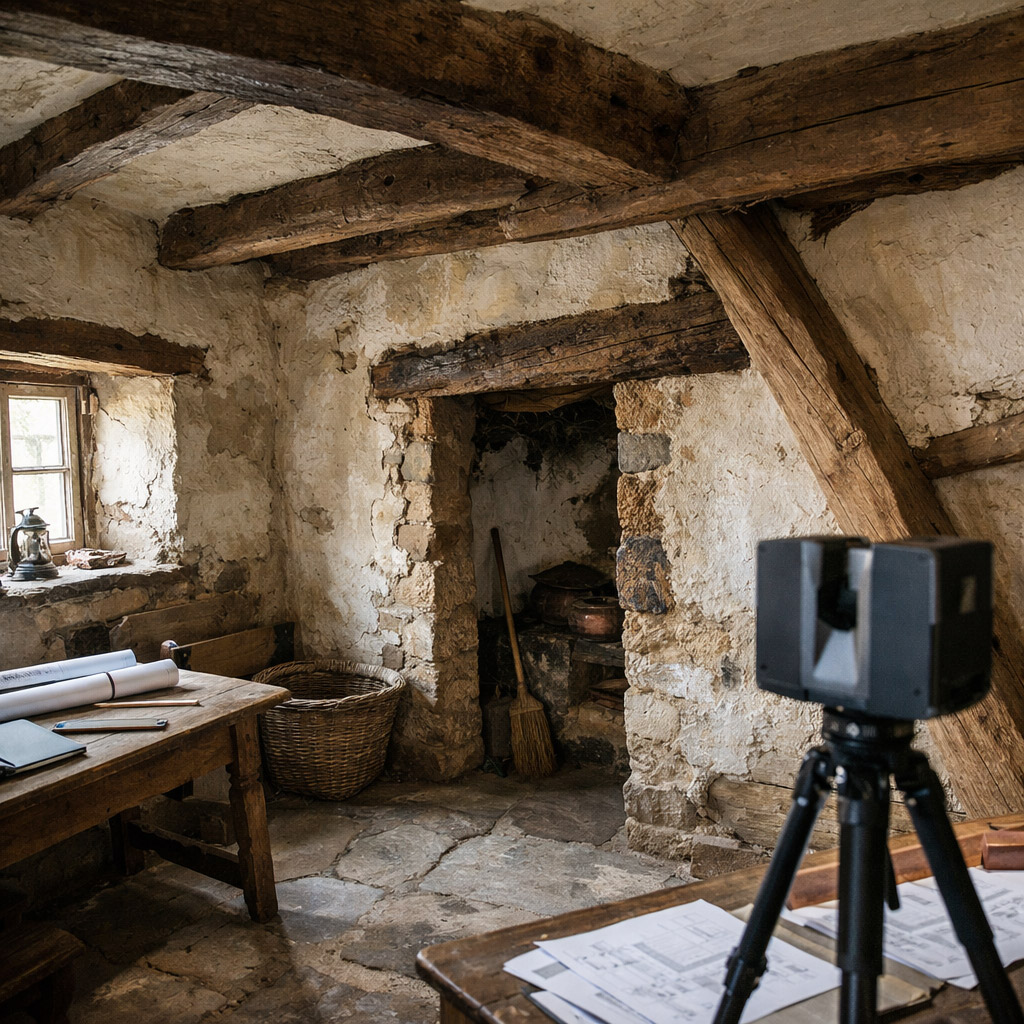
An old residential building in a village in the Swiss canton of Ticino lacked reliable, up-to-date building plans. To prepare renovation and restoration work, the engineering firm Geomatica Righitto (Lugano, Switzerland) was commissioned to do a full 3D as-built documentation.

Traditional plans were missing or outdated, and the building required precise measurements to support planning in CAD and BIM software.

Missing Plans, Irregular Geometry, and the Need for Precision

Older buildings rarely follow perfectly straight lines or standardized geometries. Over decades – or even centuries – walls may shift, floors may sag, and angles deviate from 90 degrees.

This means: assumptions based on symmetry or “standard” geometry can be highly misleading.

For renovation work, especially structural or restorative interventions, accurate data is crucial. Because no reliable plans existed for this house and its geometry was visibly irregular, a precise and complete measurement was essential, making 3D laser scanning the ideal method.

Survey: Faro Photon 120, Faro Scene, and Efficient On-Site Work

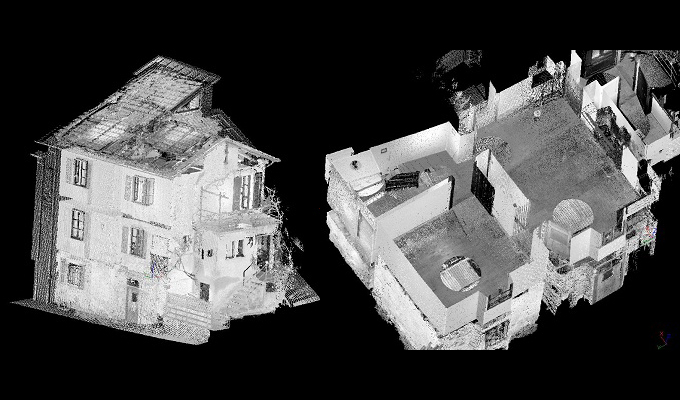
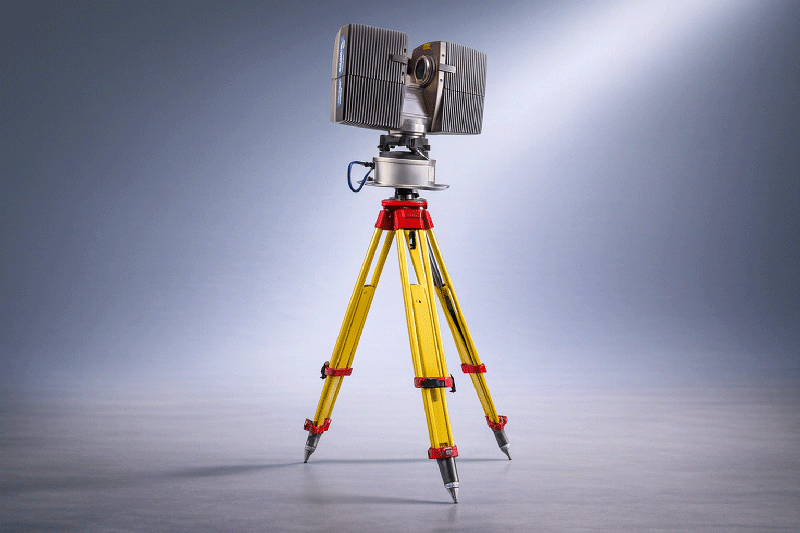
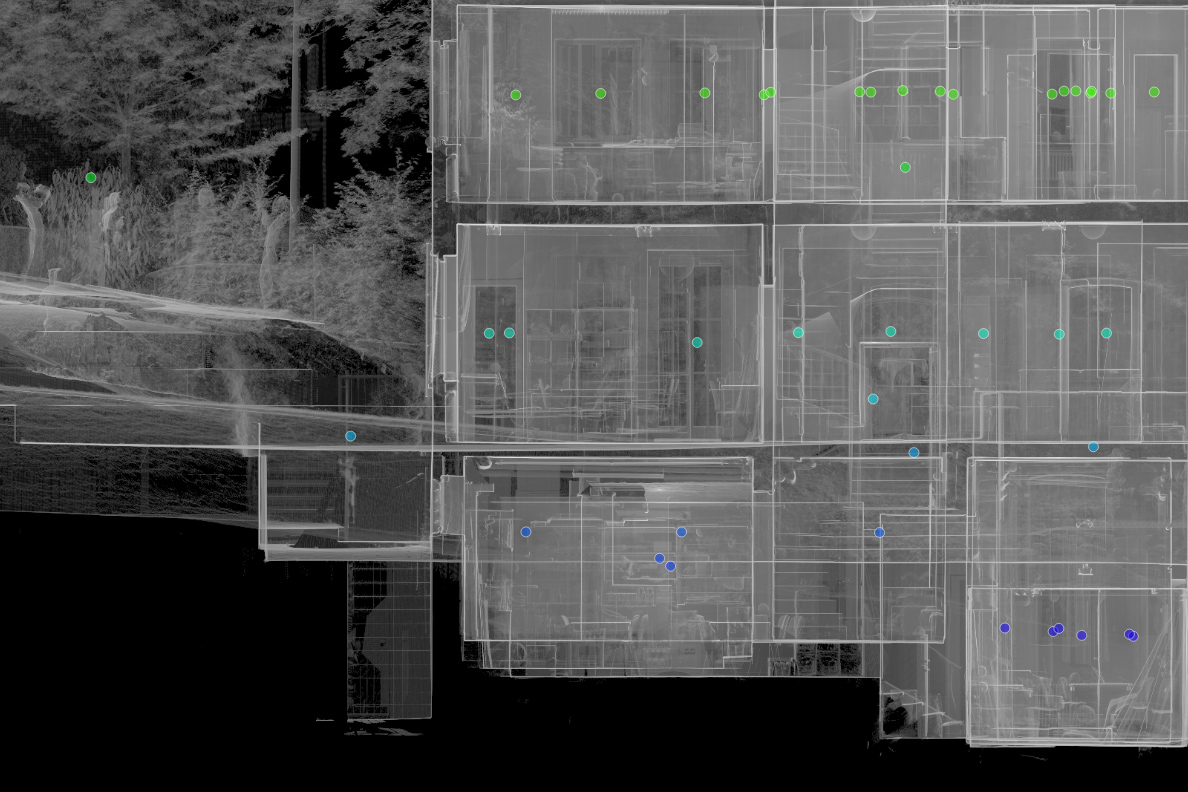
Geomatica Righitto used a FARO Photon 120 laser scanner to capture the entire building, including:

  • three façades,
  • the basement,
  • the roof,
  • and all four floors.

In total:

  • 29 scans,
  • 6 hours on site,
  • 3 survey specialists.

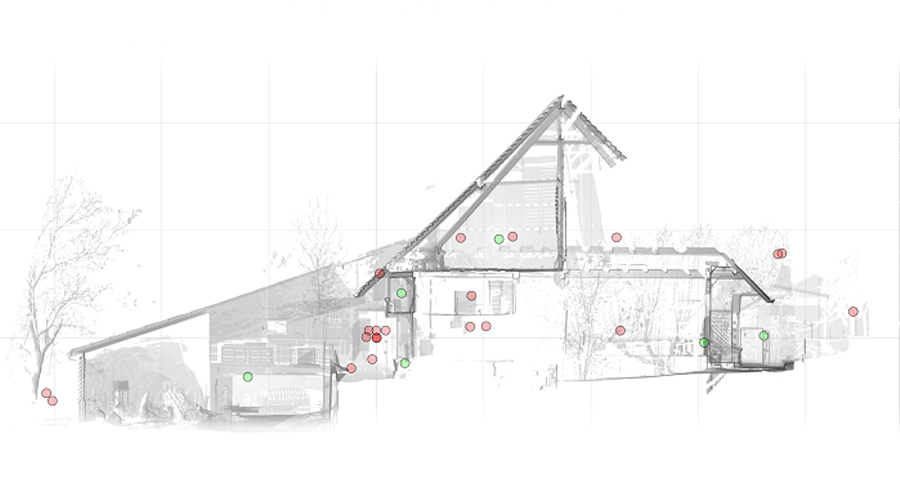
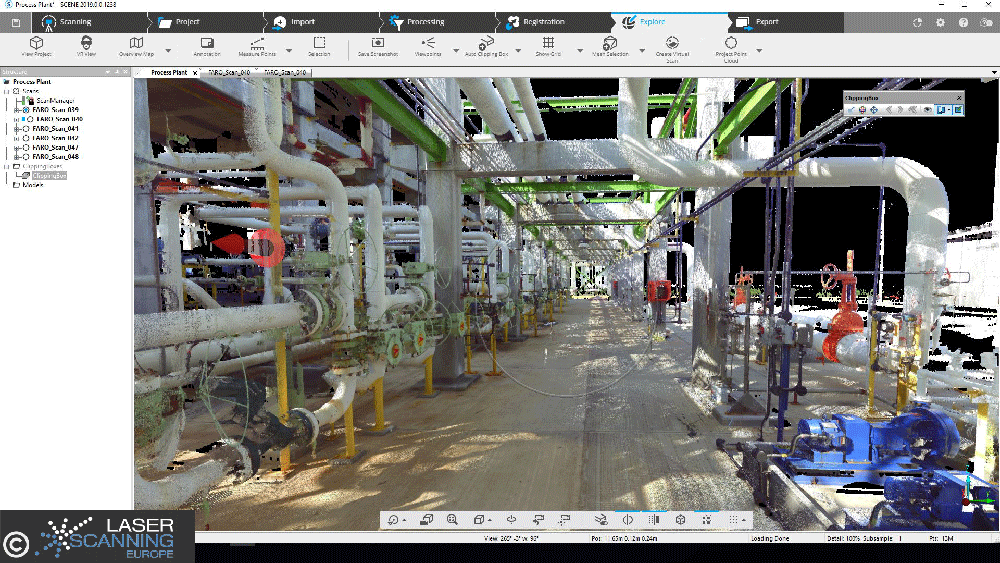
All scans were registered and merged in FARO Scene, ensuring correct alignment and a unified, consistent point cloud.

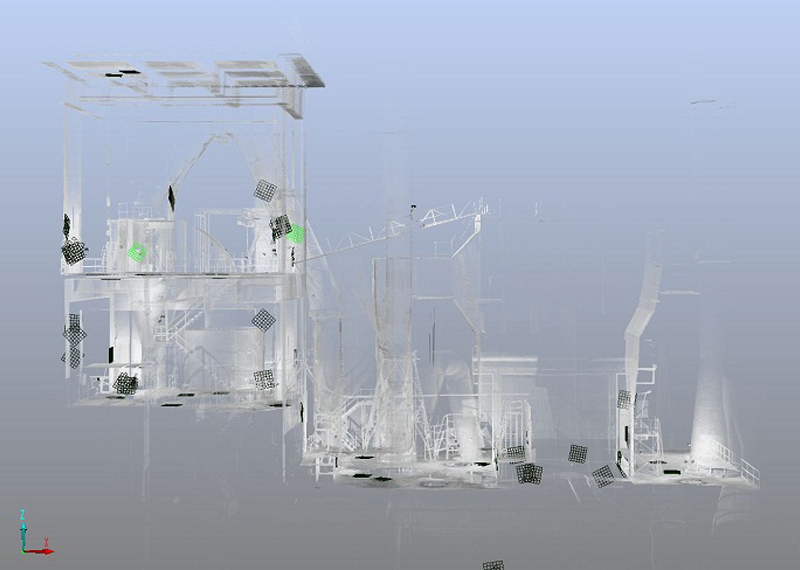
This point cloud became the complete digital representation of the building, including all the irregularities typical of older structures.

Point clouds are for engineers, plans for architects. PointCab Origins is the fastest connection between them.
Marzio Righitto
Engineer - Pastorelli SA
Dez. 2018

Processing the Point Cloud: Fast Extraction of Plans and Sections

Once the unified point cloud was ready, Geomatica Righitto used PointCab Origins to extract essential architectural outputs:

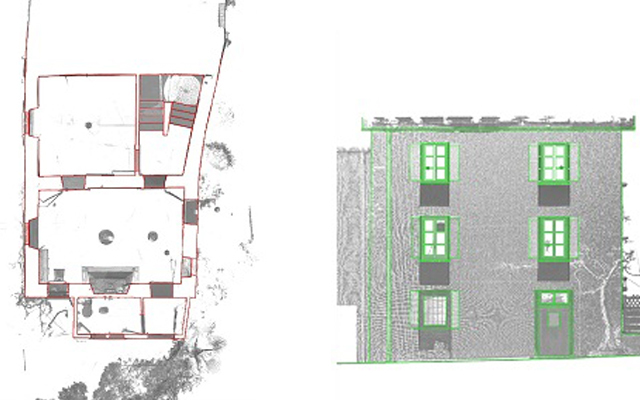
  • 4 floor plans
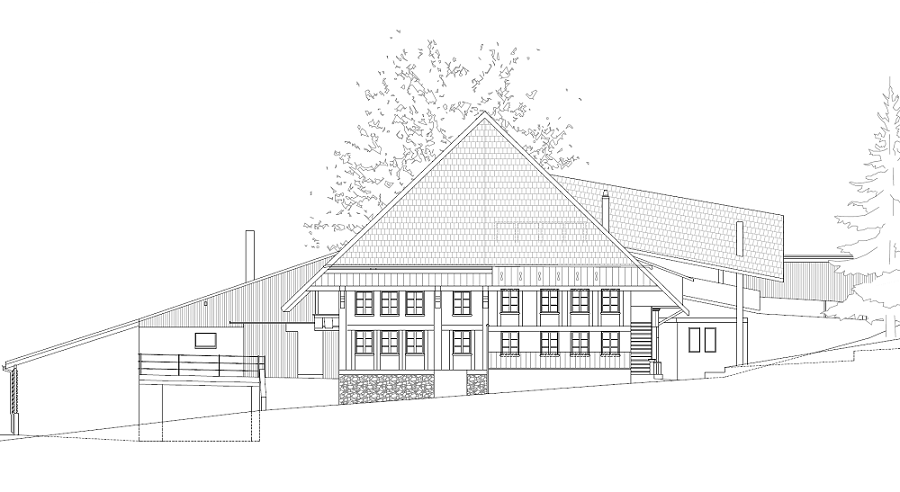
  • 3 façade plans
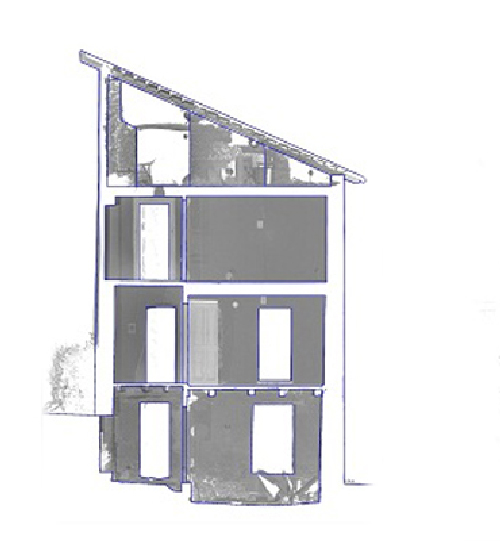
  • 20 building sections
  • Orthophotos for façades and interior walls

These automated extractions significantly reduced manual drafting work.
The final drawings — both as-built documentation and renovation plans — were delivered in a CAD/BIM-ready format for use in Archicad.

The entire processing workflow, including preparation for delivery, took about 8 hours.

What This Case Study Demonstrates

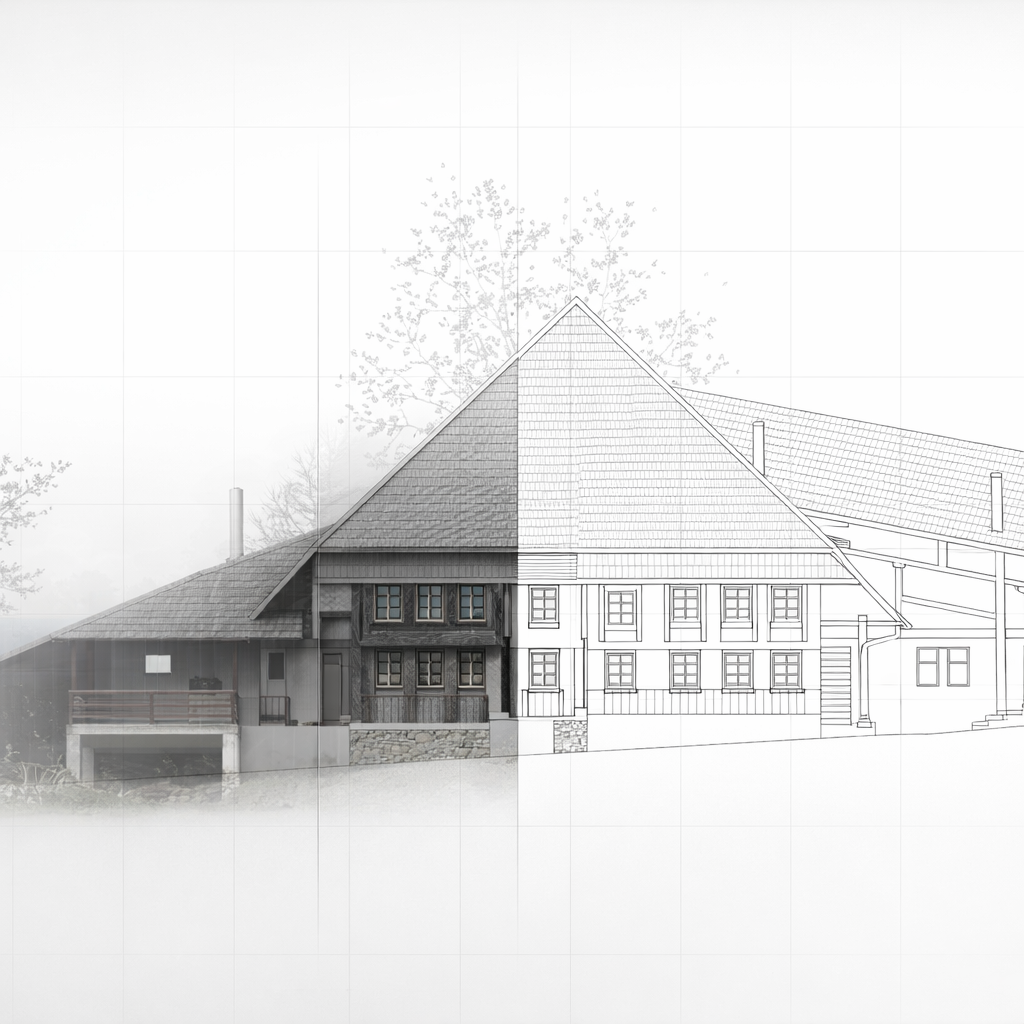
This project shows how even older buildings with irregular geometry and missing documentation can be comprehensively captured. Old buildings are rarely dimensionally perfect, but laser scanning captures reality exactly as it is, and the resulting point cloud becomes a trusted digital baseline.

The combination of FARO Photon 120, FARO Scene, and PointCab Origins enabled Geomatica Righitto to create reliable plans quickly –  giving architects and engineers the confidence they need to design renovations and restoration work effectively.

Want to keep up with the latest pointCab news?

Then follow us on Social Media or subcribe to our newsletter!

Surveying of 12.000sqm of inhabited floor space

blank

Surveying 12,000 m² of Inhabited Floor Space:
Why a Complete 3D As-Built Survey Was Needed

The project involved surveying more than 12,000 m² of inhabited floor space, including a hotel, a municipal theatre, offices and residential units.

For such mixed-use buildings, reliable and up-to-date as-built plans are essential — especially when fire-protection documentation is required.
Because existing plans were incomplete and the building was in active daily use, a full digital survey became the most efficient and accurate solution.

The Challenge: Surveying a Large, Inhabited Mixed-Use Building

Inhabited buildings present extra challenges compared to empty or unused structures:

  • Continuous operation: Hotel guests, office staff and residents could not be disturbed.
  • Mixed layouts: Hotels, theatres, offices and residential spaces each have different room structures, escape routes and technical areas.
  • Complex circulation: Theatre back-of-house zones, technical rooms and varying ceiling heights complicate manual measurement.
  • Large total area: Over 12,000 m² had to be captured consistently across several building sections and levels.

To meet these challenges, the team selected a high-precision, fast and non-intrusive method: 3D laser scanning.

How the Survey Was Completed: FAST Laser Scanning With Only Two People

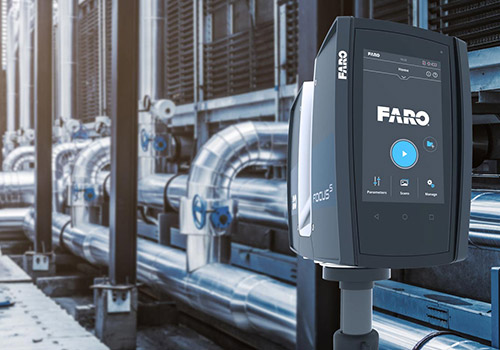
The surveying was executed by Faschang Service & Management GmbH, who used a FARO Focus3D laser scanner to capture every part of the building.
Despite the size and complexity, the entire scanning process was completed:

  • in 45 hours,
  • using just two employees.

This shows the efficiency of laser scanning in inhabited environments: the scanner captures geometry quickly, quietly and with minimal disruption to regular building operations.

Point Cloud Evaluation in PointCab Origins: From Scan to Plans

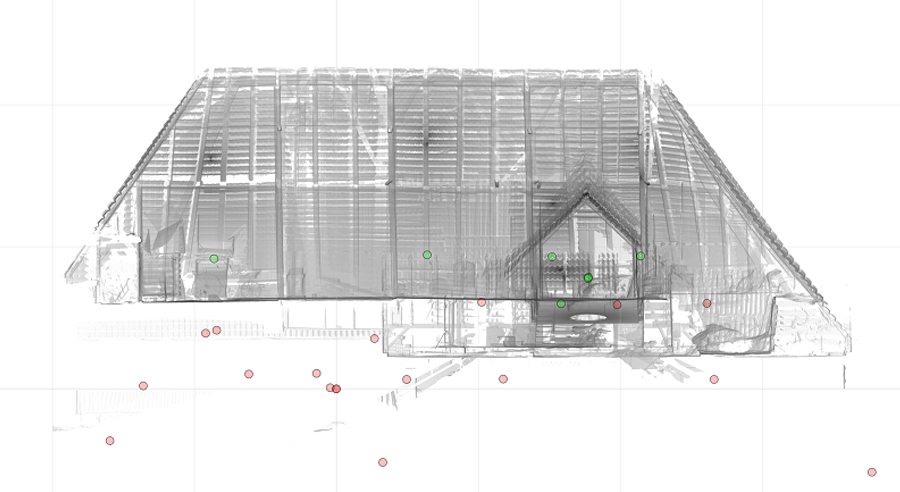
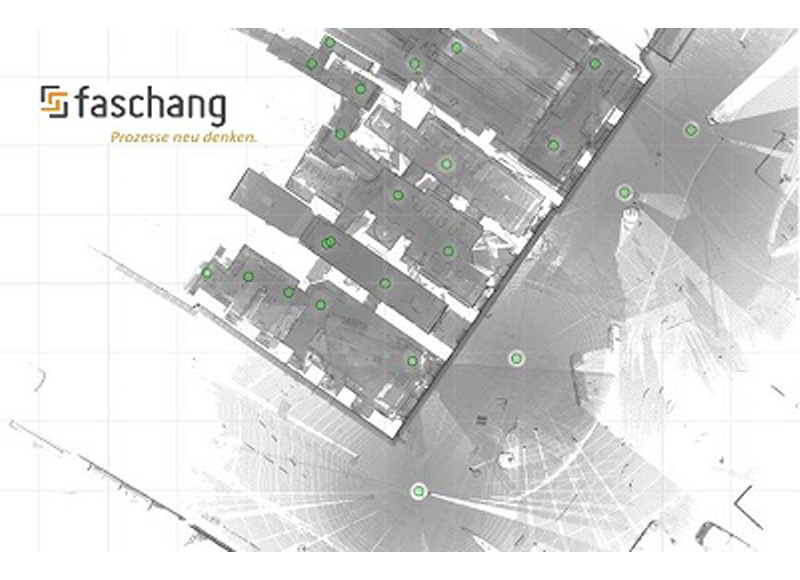
Once the point cloud was created, it was processed in PointCab Origins, where essential deliverables were generated automatically:

  • floor plans,
  • site plans
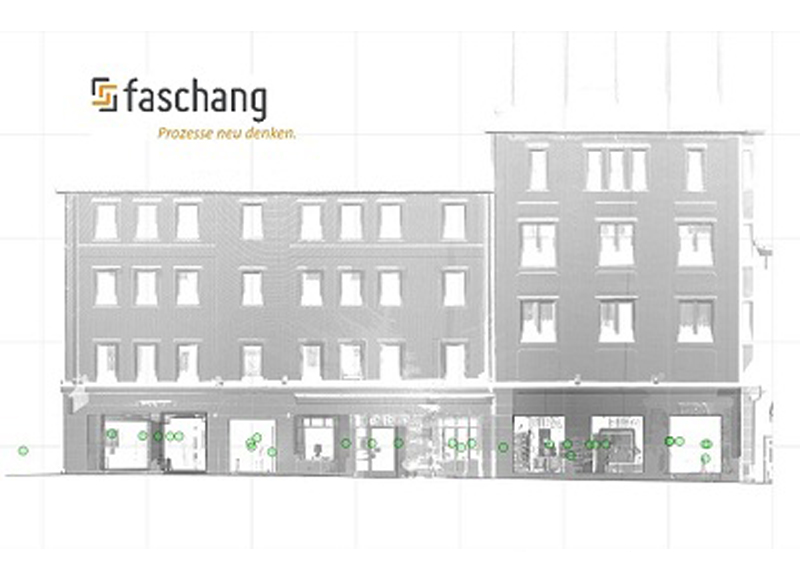
  • sections
  • orthophotos.

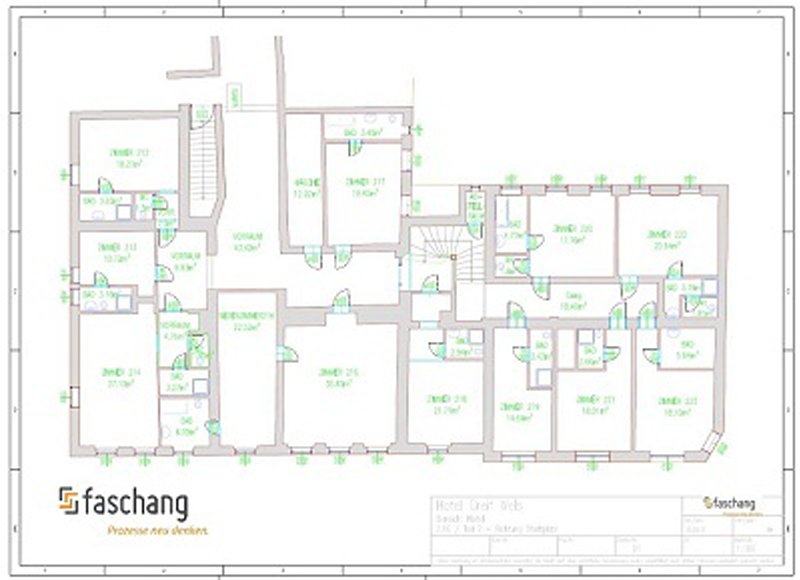
Using these true-to-scale orthophotos, the team produced the required as-built drawings and fire-protection plans in AutoCAD.

Because all data originated from the point cloud, the resulting plans were consistent, accurate and based on the current state of the entire 12,000 m² complex.

The perfect software solution for efficient creation of orthophotos and as-built plans.
Faschang Service & Management GmbH
Jun. 2013

Digital Data for Future Use: One Scan, Many Applications

A major advantage of the workflow is that the complete point cloud was stored as a digital record.
This proved useful later: when façade drawings were needed for extension planning, the team was able to generate them directly from the existing scan — without additional site visits.
One scan created a long-term data resource that can support fire protection, renovation, design updates or further documentation tasks.

Want to keep up with the latest pointCab news?

Then follow us on Social Media or subcribe to our newsletter!