
As-built documentation of a planetarium

blank

Using LIDAR technology for as-built documentation of a planetarium

blank

Thanks to the use of laser scanning and PointCab Origins Pro, placing new projectors is no longer a problem

The precise placement of projectors in specially designed theatre rooms within planetariums is no easy task. Just measuring these rooms, which have sloping floors and domes, is a challenge. In addition, the measurement results and the design proposals derived from them must be communicated clearly and concisely to all project participants.

In the USA, the professionals from Seiler Instrument, more precisely Seiler’s Planetarium Division, are often called in for such jobs. Seiler employee Howard George used to use a combination of manual measurements and a total station for this task- a very time-consuming process. To speed up and simplify the process, laser scanning and PointCab’s point cloud software were therefore used for the first time.

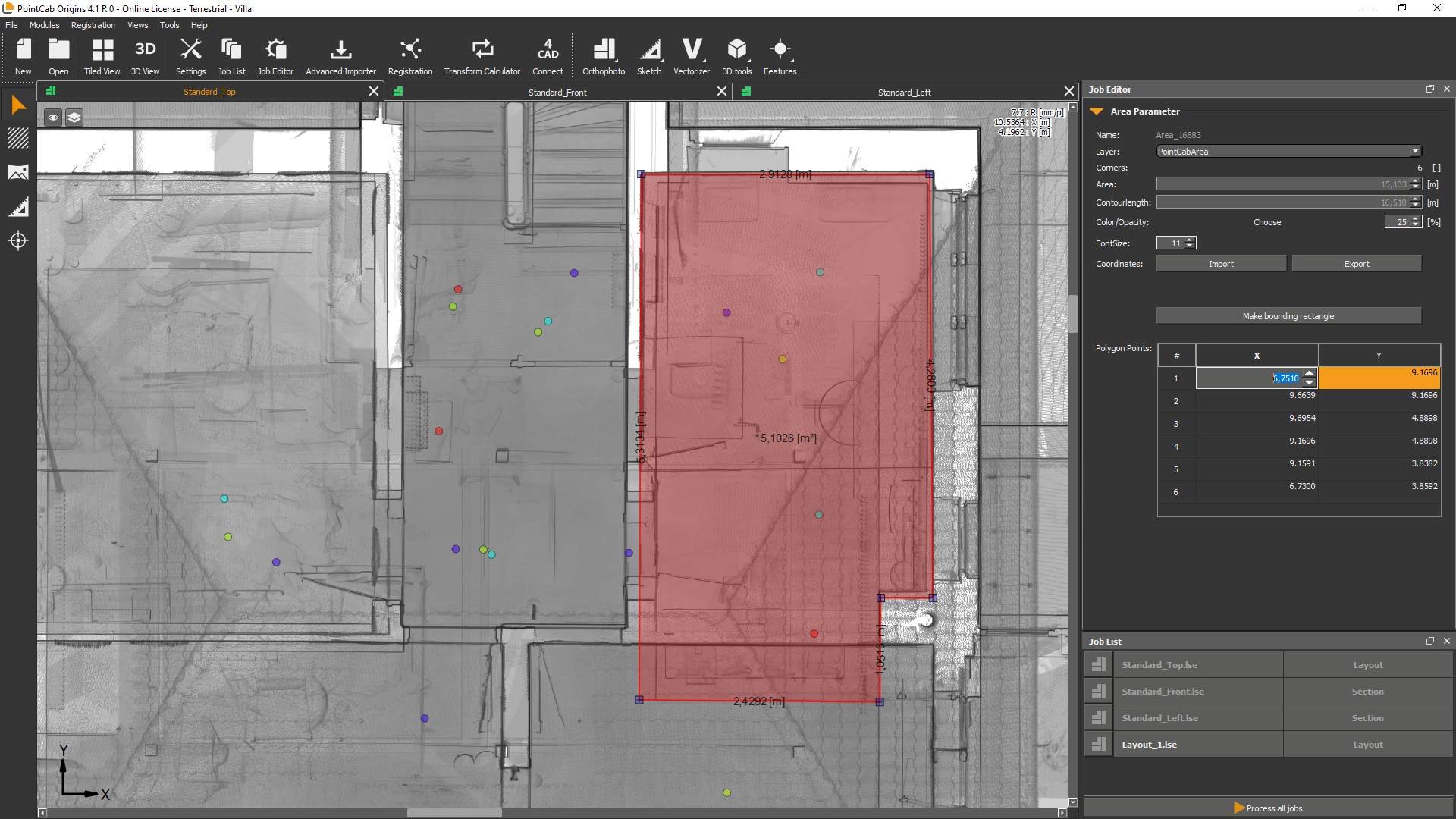
The first step was to employ a handheld GeoSLAM ZEB Revo RT LiDAR scanner that creates 3D point clouds literally in minutes. Then the challenge was to efficiently extract the geometry and features to create BIM models of the spaces and better communicate the design intent to project stakeholders. To achieve this, Howard was provided with a trial version of PointCab 3D Pro (now Origins Pro). This is an easy-to-use point cloud editing and sharing software that was recommended by the Design Solutions team at Seiler. Howard comments, “In non-orthogonal areas like planetariums, PointCab allows me to freely tilt, rotate and magnify data points and orient perspectives. ” Thanks to the PointCab and Revit support, as well as online resources, Howard was able to start modelling from the point cloud within a few days, even as a novice, thanks to PointCab`s 4Revit plugin. This allowed him to simulate the placement of the projectors as-is and quickly create vectorised CAD schematics of the space and installation details. He was thrilled: “PointCab’s software exports 2D images of 3D spaces, but screen sharing the software via Zoom or simply forwarding my results with PointCab Share allows me to walk anyone through my process and show them whatever they want to see.” 

Verschiedene Evaluationen in Origins Pro

blank

The powerful combination of LiDAR scanning technology and PointCab Origins Pro has had a profound impact on the schedule and customer experience for these complex projector installations. Howard says: “I’m given metric spherical coordinates from ZEISS  to place projectors in relation to the dome. In PointCab, I export Cartesian imperial coordinates to place the projector stands on the floor.  Then the PointCab software exports 2D images of 3D spaces to me. Sharing data via PointCab Share (freeware) or screen sharing via Zoom allows me to share each step of the process with everyone and show in detail what is of interest.” In just one week, essential but very time-consuming tasks were thus radically reduced and changed for the better for everyone involved in the project. Once tested, the Seiler Planetarium Division would like to continue to rely on the combination of laser scanning and the PointCab software in the future.

Conversion of a former mustard factory

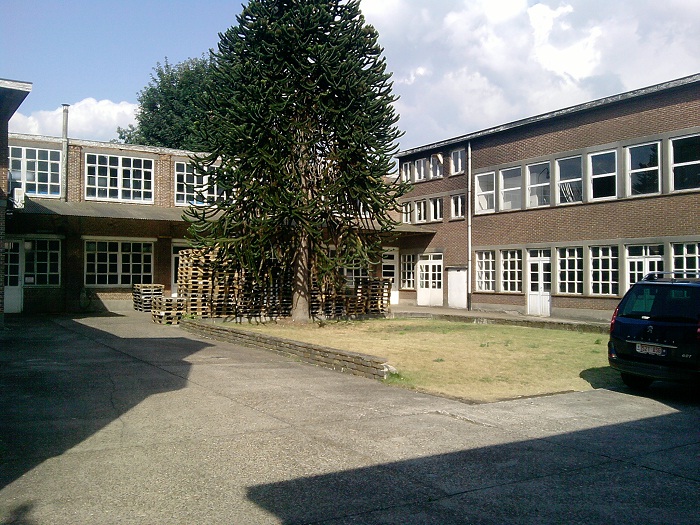
Senffabrik von außen

The Challenge: No Existing Floor Plans and Time-Sensitive Planning

In this project, an old mustard factory was being converted into a residential building. The two-story, U-shaped structure contained former production rooms, storage areas and garages – but no current, reliable as-built plans were available for this complex task. 3D laser scanning provided the precise documentation needed for planning and design.

Converting an industrial building into residential space requires accurate knowledge of existing conditions. Without updated plans, planners and engineers risk costly errors during design and construction. In this case, the goal was to produce detailed floor plans and sections as CAD deliverables for the planning office – efficiently and within a short timeframe.

Capturing the Existing Building: Fast and Complete 3D Laser Scanning

The entire building was documented using 3D laser scanning within half a day. A total of 30 individual scans were carried out, capturing all relevant rooms, walls, openings and structural elements.
This approach delivered a complete and detailed point cloud representing the actual condition of the building – an essential foundation when converting industrial structures into residential use.

Die Datenauswertung hat nur 2 Stunden geadauert, was mich wirklich überrascht hat!
Mitarbeiter Bouwsupport
Jun. 2013

From Point Cloud to CAD Plans: Efficient Evaluation with PointCab Origins

After data acquisition, the point cloud was evaluated using PointCab Origins. From the scan data, the required deliverables were derived efficiently:

  • floor plans,
  • cross sections,
  • and scaled, CAD-ready drawings.

The generated data could be imported directly into the customer’s CAD system and used for further planning steps without additional re-measurement or manual reconstruction.

Planning Benefits and Project Outcomes

The complete evaluation process – from raw scan data to exportable plans took approximately two hours.
Based on the generated plans, the investment volume for the conversion could be assessed quickly and reliably. The resulting CAD data supported:

  • preliminary and design planning,
  • detailed execution planning,
  • and visualizations for residential marketing and exposés.

This workflow provided a solid digital foundation for all subsequent project phases.

Want to keep up with the latest pointCab news?

Then follow us on Social Media or subcribe to our newsletter!

Acquisition of a high school

blank

New construction and modernization of a high school on the west coast of England

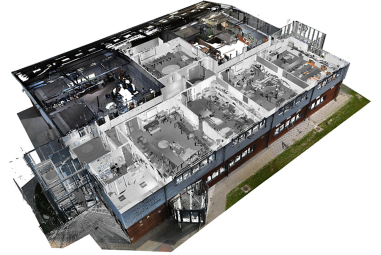
For the new construction and modernization of Skegness Academy, a high school in Lincolnshire on the west coast of England, an accurate as-built model was required.

In order to obtain the exact dimensions of the high school, the FARO Photon 120 laser scanner was used, which can capture up to 990,000 points per second. With the help of reference points in the individual scans, they could later be merged. The scans were then used to generate a dimensionally accurate point cloud that provided an accurate 3D model of the building.

For the project, PointCab Origins was used to create elevations and sections, as well as detailed, dimensionally accurate images. This allowed various views of the high school to be generated and read into Autodesk Revit. A complete 3D model was then created with just the click of a button.

The FARO Photon 120 delivered 230 scans here. Images of the entire site and the building from the inside were taken. The views were imported into Autodesk Revit. From this data, a highly accurate 3D model of the building was created.
What advantage did PointCab Origins bring here? The fully automatic generation of views and sections. Likewise, accurate and true-to-scale images were used here. The further processing of the scan data in the CAD system was also possible without plug-ins thanks to PointCab Origins. This provided the optimal basis for modeling, visualization, processing and simulation.

WHY POINTCAB ORIGINS?

Software Speed

Even the most extensive point cloud data can be evaluated easily and quickly with PointCab Origins.

Direct workflow to Revit

The information of the evaluated point cloud data can be easily and quickly transferred to Revit.

Proximity to support

PointCab’s support is characterized by comprehensive expertise and individual attention.

We think PointCab Origins is the fastest way to extract plans and sections from point clouds.
Eric Bergholz
CEO Laserscanning Europe
Jun. 2013

About Laserscanning Europe GmbH

Laserscanning Europe is the leading system company for 3D laser scanning. As an independent and experienced partner, we can offer our customers the best project solution for their application.

By renting and selling laser scanning hardware, software and accessories, we provide our customers with the required tools for their projects. In our training courses, we share our know-how and many years of experience from various projects. On demand, we support our customers with data collection by means of 3D scanners, analysis of scan data and modeling.

https://www.laserscanning-europe.com

BIM model of a hotel in St. Moritz

blank

From scan to BIM on the fly – HMQ scans luxury hotel in St. Moritz

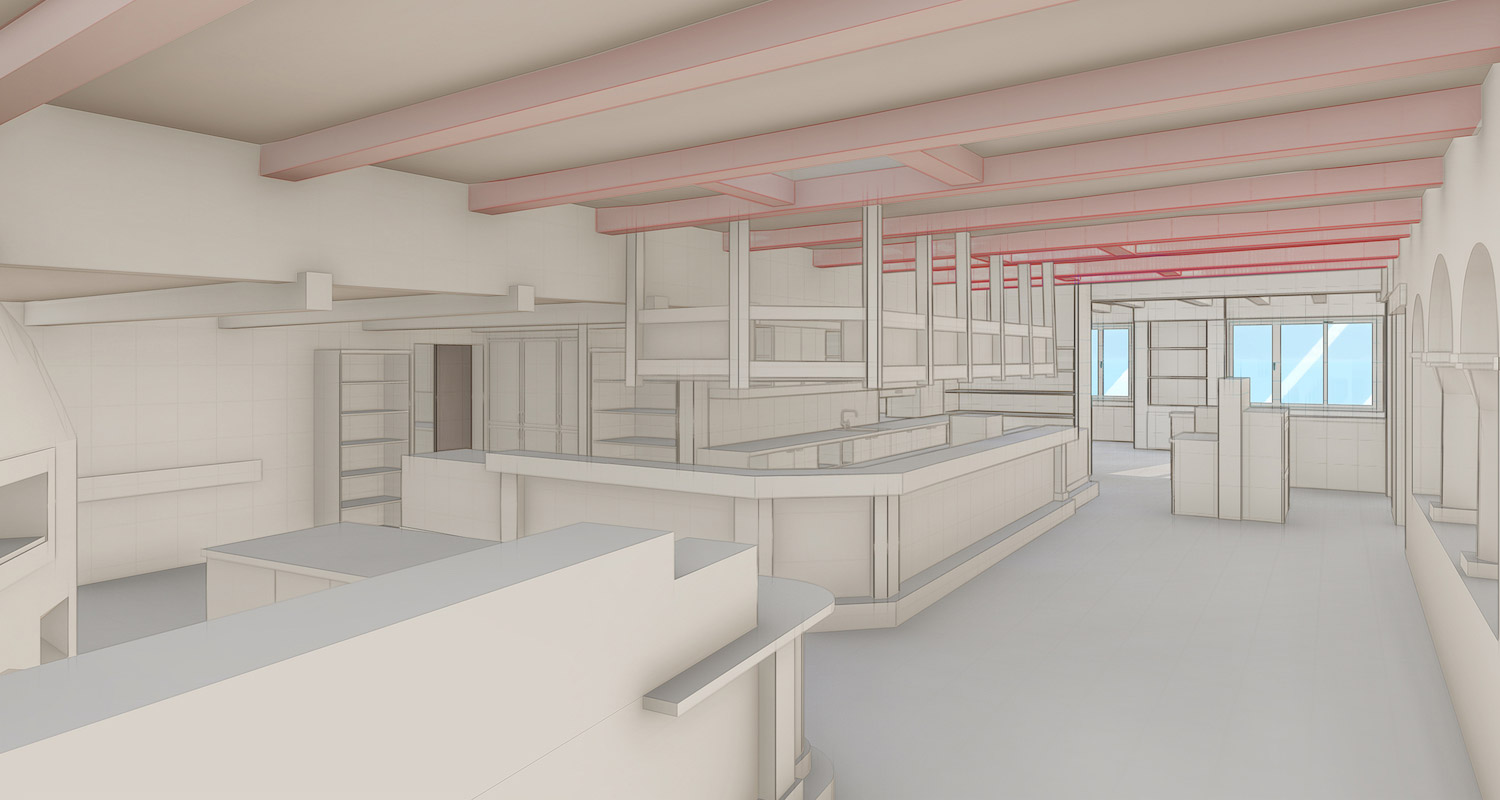
The Hotel Sonne in St. Moritz is a popular destination for skiing and Welness vacationers. To prepare the hotel for the future, HMQ AG was commissioned to generate a comprehensive 3D building model of all interior spaces and the exterior facade. The 3D point cloud data was required for further processing in Graphisoft Archicad to create a complete BIM model.

Right from the start, the project included a major challenge: the acquisition of the hotel with laser scanners from FARO had to take place during the peak winter season and also during ongoing guest operations. The entire building therefore had to be captured as quickly as possible and without major disruption to guests. In the interior, a floor area of 1,100 m² had to be surveyed, distributed over three floors and a building height of approx. 10 meters. Outside, the work was no easier. The snow lying at the time of the project, which is why vacationers primarily traveled to St. Moritz, made the scans of the facade difficult.

HMQ, however, managed all challenges and had a huge amount of point cloud data from around 500 scans after only 72 hours. HMQ has been using Archicad 21 software to create BIM models for some time. To be able to use the point cloud data for processing in Archicad, HMQ uses PointCab Origins. More specifically, use the 4BIMm plugin, which allows the point clouds to be analyzed and the information seamlessly transferred into ArchiCAD. This reduced time for HMQ and, consequently, project costs. Putting all this together, the result was a relaxed project process for everyone involved. This can only be beneficial for a vacation hotel.

The basis for this is the uniquely fast processing of the most extensive point clouds in PointCab Origins. Ease of use was the main focus when Christian Vetsch, Managing Director at HMQ together with his team decided to use PointCab Origins three years ago. The great compatibility with all scanner types and makes made the decision even easier for HMQ.

“We chose PointCab Origins because the software is easy and intuitive to use and is constantly being developed,” says Christian Vetsch. If you ask HMQ employees, they also appreciate the uncomplicated proximity to PointCab support.

WHY POINTCAB ORIGINS?

Software Speed

Even the most extensive point cloud data can be evaluated easily and quickly with PointCab Origins.

Direct workflow to ArchiCAD

The information of the evaluated point cloud data can be easily and quickly transferred to Graphisoft ArchiCAD.

Proximity to support

PointCab’s support is characterized by comprehensive expertise and individual attention.

We chose PointCab Origins because the software is easy and intuitive to use and is constantly being developed
Christian Vetsch
Managing Director HMQ AG
Dez. 2018

About HMQ AG

HMQ AG, based in the cantons of Graubünden, Zurich and Aargau, is one of the leading Swiss engineering and planning companies.
The core competencies of the engineers, planners and consultants of the HMQ Group lie in the specialist areas of surveying, construction and planning. To ensure customer satisfaction as well as to offer employees an exciting work environment, HMQ AG builds on innovation, quality and technology.
To the HMQ AG website: http://hmq.ch/

Surveying Dunelm House

dunelm house

Dunelm House: Why a Precise 3D Survey Was Needed

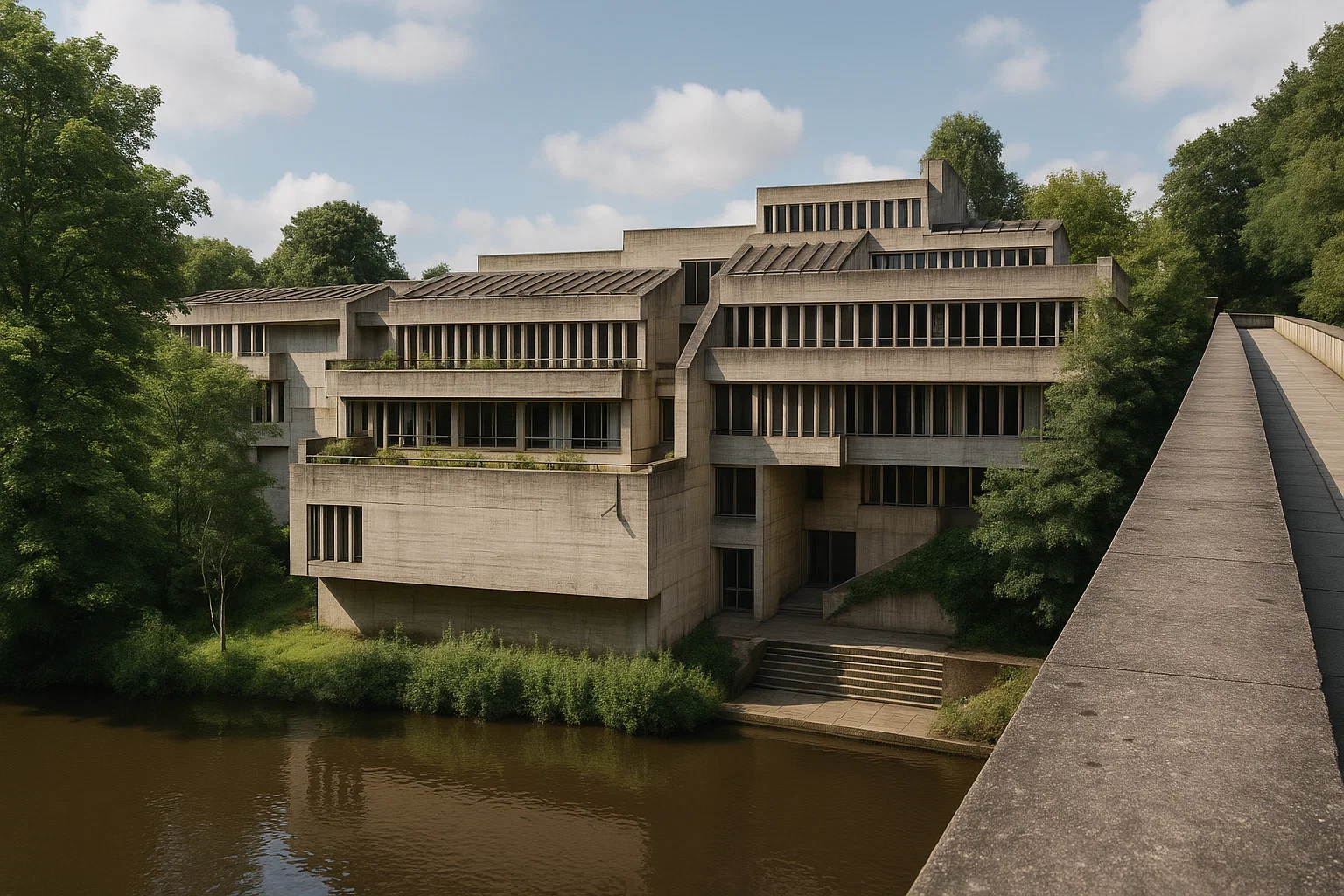
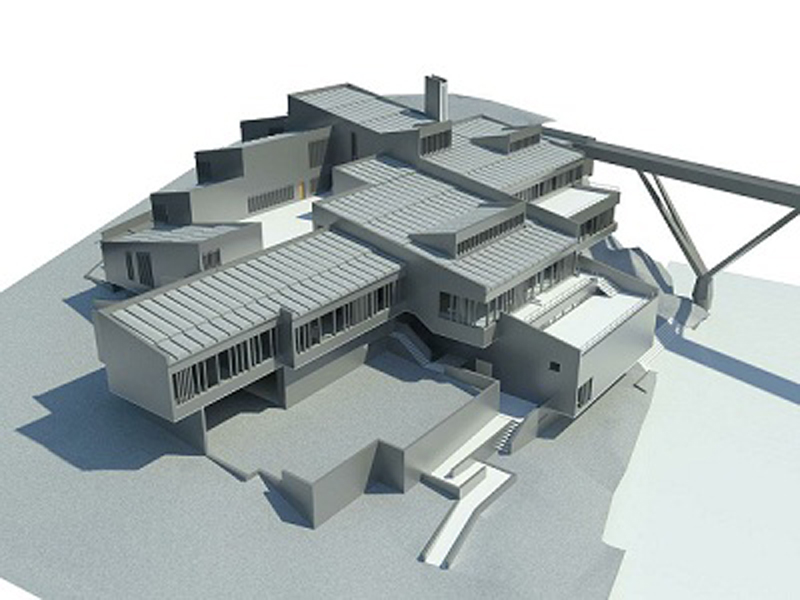
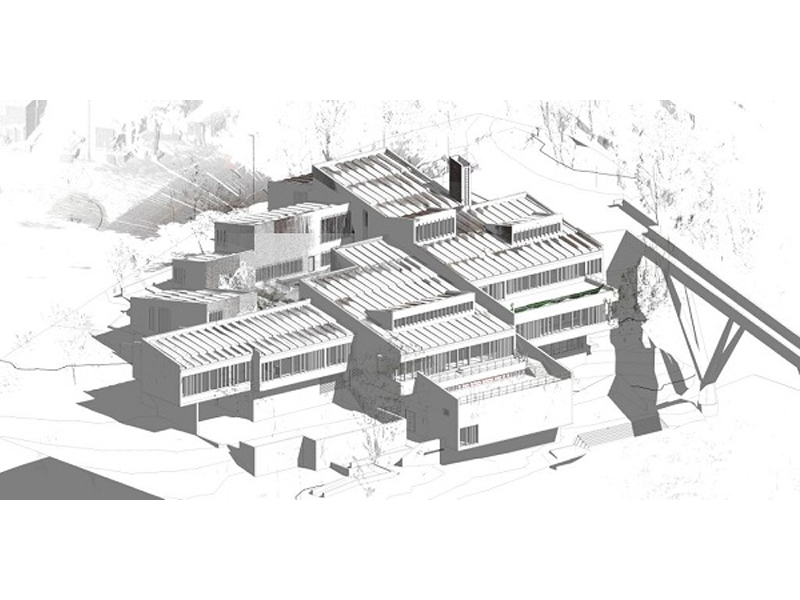
Dunelm House (1966) is Durham University’s well-known students’ union building. Designed in the post-war modernist style, it sits directly on the steep banks of the River Wear. Furthermore, it is connected to the equally iconic Kingsgate Bridge.

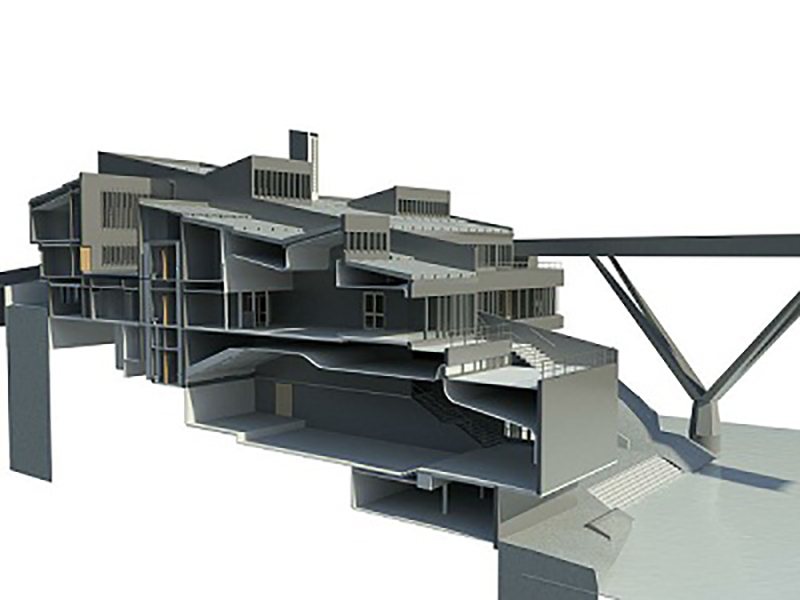
The structure is characterized by exposed concrete and terraced floor levels. A multi-angled, irregular roofscape follows the natural slope of the riverbank. This bold design makes Dunelm House architecturally significant  – and challenging to measure.
When leaks appeared across several roof areas, a detailed digital survey was needed. The aim was to document the current condition and guide the renovation.

The Challenge: Complex Roof and Difficult Site Conditions

The student building’s roof consists of intersecting levels, changing slopes, and unconventional angles. Combined with its sloping riverside location, this makes traditional measurement methods unreliable and slow.

To capture the structure accurately and efficiently, the project required a modern surveying approach capable of documenting every plane and surface with precision.

How the Survey Was Completed: Laser Scanning + GPS

The survey was carried out by Bury Associates Ltd using two FARO Focus3D laser scanners. To record the terrain and ensure accurate referencing across the entire site, the team also used total stations and GPS equipment.

This hybrid surveying method made it possible to capture:

  • the full exterior geometry of Dunelm House,
  • its complex multi-level roof structures,
  • and high-precision topographic context along the River Wear.

The result was a detailed point cloud covering the entire building and its surroundings.

We think PointCab Origins is the fastest way to extract plans and sections from point clouds.
Bury Associates Limited
Dez. 2018

From Point Cloud to 3D Model: Deliverables in Four Days

After the scanning process, the data was processed using PointCab Origins, which enabled the team to deliver complete documentation in just four days.
The deliverables included:

  • orthophotos,
  • 2D floor plans,
  • sections and elevations,
  • and a full 3D Revit model created from the processed Origins data.

By exporting PointCab’s results into Autodesk Revit, the project team gained a BIM-ready model with the accuracy needed to analyse the leaking roof and plan the renovation.

How the Digital Survey Supports the Renovation Process

The Dunelm House project shows how 3D laser scanning, precise site measurement, and point cloud processing can deliver fast, reliable results — even for buildings with complex shapes and challenging site conditions.

With the combination of FARO scanners, survey instruments, and PointCab Origins for evaluation, Bury Associates delivered a complete set of renovation-ready outputs, including a detailed Revit model.
This provided architects and engineers with a solid digital foundation for repairing and preserving one of Durham’s most distinctive architectural landmarks.

Want to keep up with the latest pointCab news?

Then follow us on Social Media or subcribe to our newsletter!